
What is International Baccalaureate? - A Comprehensive Guide to the IB Diploma
Thursday, January 23, 2025
When exploring high school curriculum options, it's almost impossible to overlook the term 'IB.' As more schools worldwide adopt International Baccalaureate (IB) programmes, many parents and students find themselves wondering: What exactly is the IB, and how can it benefit a student’s academic journey?
This article will provide a comprehensive overview of the IB programmes, where to find IB schools, and the courses offered. Additionally, it will guide you on how to choose the right IB courses to align with your academic goals and aspirations.
The International Baccalaureate at a Glance
The IB Continuum of Programmes
Created in Geneva, Switzerland, in the 1960s, initially, The International Baccalaureate (IB) catered to the children of diplomats and international families who often moved between countries and struggled to fit into local curriculums. By offering standardized courses and assessments, the IB facilitated their transition to higher education, ensuring consistency in education regardless of geographic mobility.
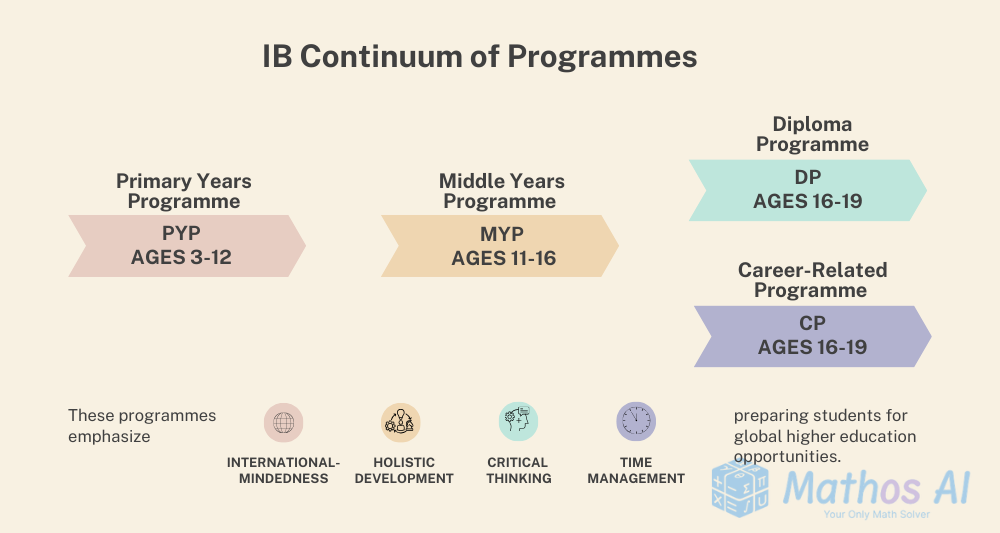
Over the last 60 years, global mobility has become more common as families embrace opportunities across regions and countries. The IB has evolved to meet these changing needs by offering the IB Continuum of Programmes, which includes four core programmes for students aged 3 to 19:
What Schools Offer the IB Curriculum?
In Europe and Worldwide
In countries where English is not the official language, access to IB programmes often depends on the availability of English teaching resources. Thus, the IB curriculum is primarily offered by international schools and private schools in non-English speaking countries, in contrast to public schools which offer their official language teaching primarily.
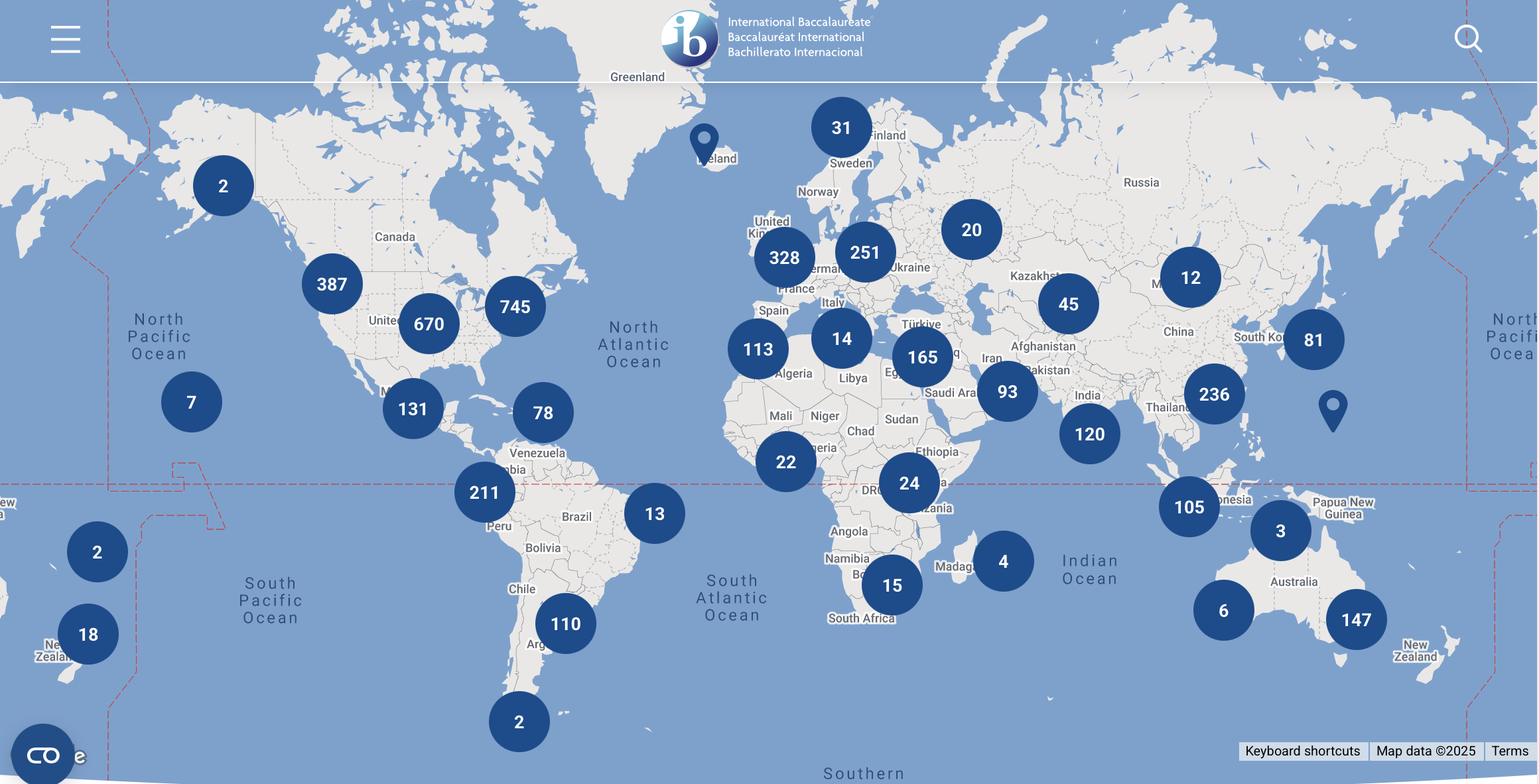 Image sources: IBO
According to the International Baccalaureate Organisation (IBO), there are more than 5,500 IB schools around the world. If you are curious about schools near you offering IB programmes, use the IBO’s school search tool to locate authorized IB World Schools near you.
In the United States
The US is somewhat unique in its approach to the IB curriculum. Among all schools that offer IB classes, a significant percentage falls to public schools (89%). States such as California, Washington, Florida and Texas have the largest number of IB schools in the US.
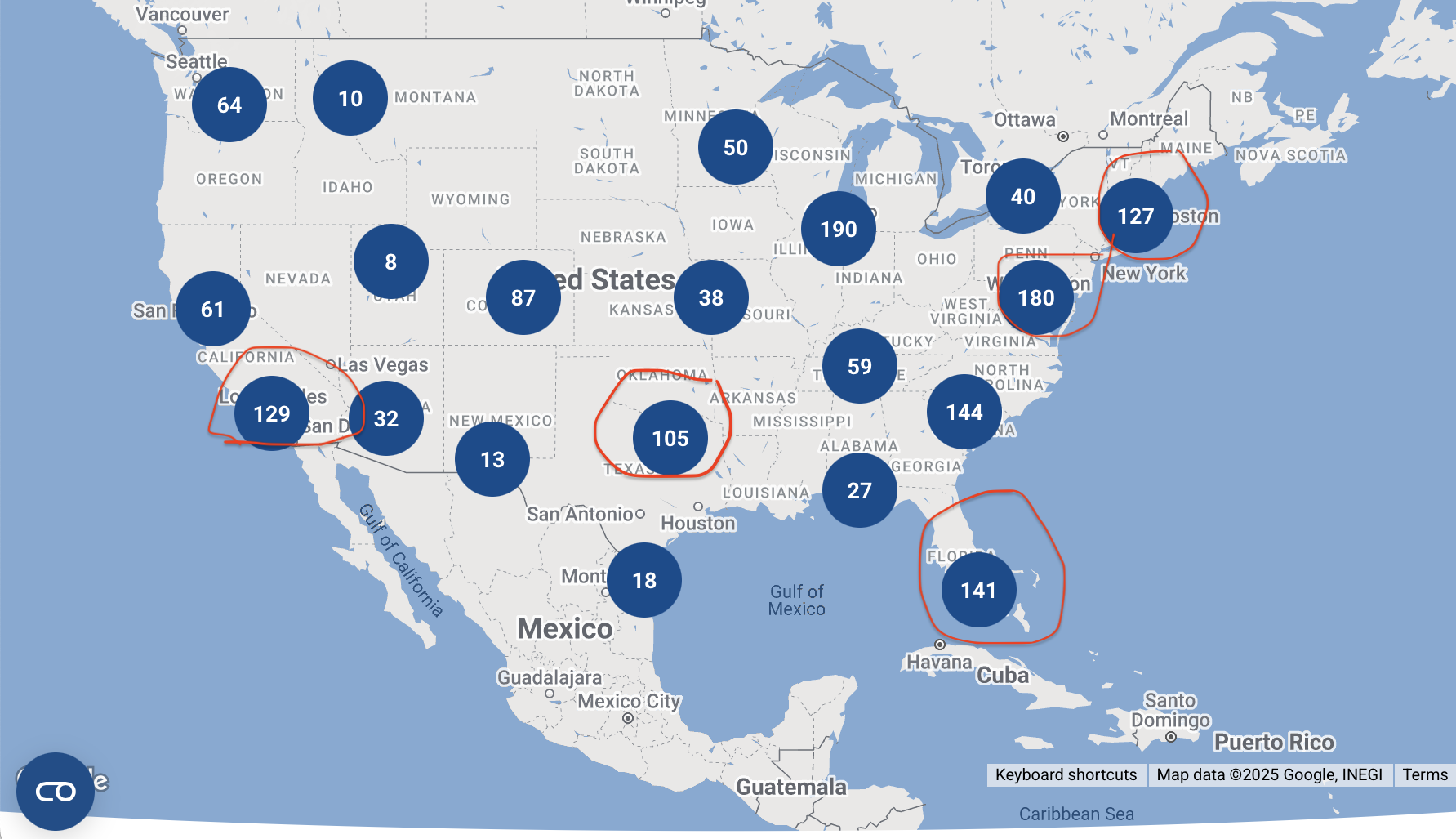 Image sources: IBO
According to Niche.com, top public schools, where IB curriculum is offered, include International Academy in Oakland County Michigan, Signature Schools in Indiana, Stanton College Preparatory in Jacksonville, Florida, etc. These schools integrate IB programmes to provide rigorous educational opportunities for diverse student populations, sometimes as an alternative to Advanced Placement (AP) courses, that enable them a favourable leverage in terms of college application.
What do Students Achieve from IB Courses (DP and CP) ?
Most people interested in learning about IB programmes are primarily focused on the education offered to the 16-19 age group. The International Baccalaureate provides two options for this age range: the Diploma Programme (IBDP) and the Career-related Programme (IBCP). While these programmes share some structural similarities, there are key differences that are worth exploring to make an informed decision. In this guide, we’ll delve into the IB courses, the cores, assessment methods, scoring system and how widely graduates are accepted into colleges.
What are the IBDP Courses?
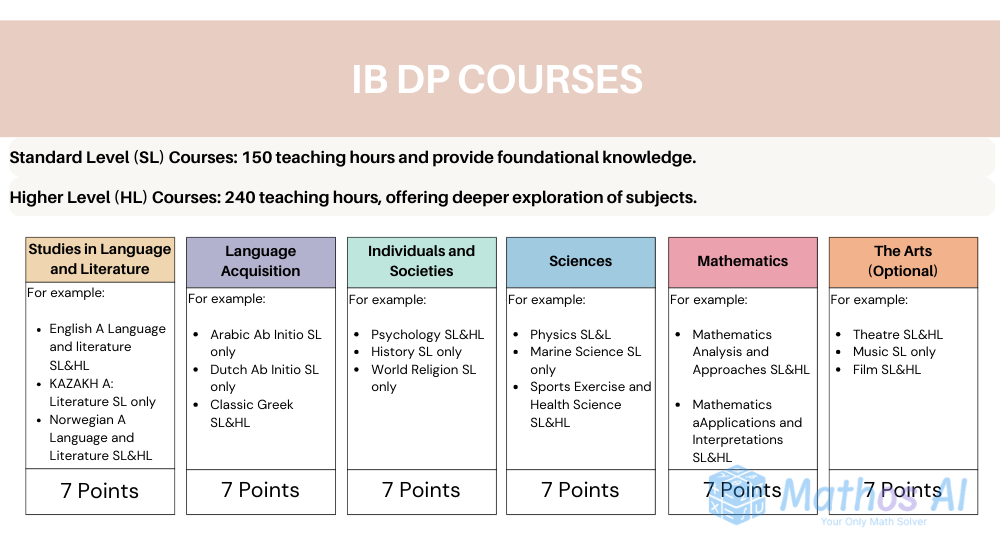
The IB Diploma Programme (DP) offers courses across six subject groups: Studies in Language and Literature, Language Acquisition, Individuals and Societies, Sciences, Mathematics, and The Arts. Within these groups, there are over 160 courses available, some offered at Standard Level (SL), and others at both SL and Higher Level (HL). Students select courses from these groups based on their academic goals and future plans.
Students typically opt for IB courses for three main reasons.
-
First, to earn the full IB diploma, which requires a carefully balanced selection of six courses, including both SL and HL courses, covering all six subject groups or substituting The Arts with a course from another group.
-
Second, to acquire the Career-related Programme (CP), which requires taking at least two courses from the IBDP curriculum in addition to career-related studies, allowing for a more specialized focus.
-
Third, in the United States, some students strategically combine AP (Advanced Placement) and IB courses to strengthen their college applications and gain an edge in competitive admissions processes. A total of 464 universities and colleges in the US consider IB courses if candidates submit their IB scores alongside transcripts from other programs or additional achievements.
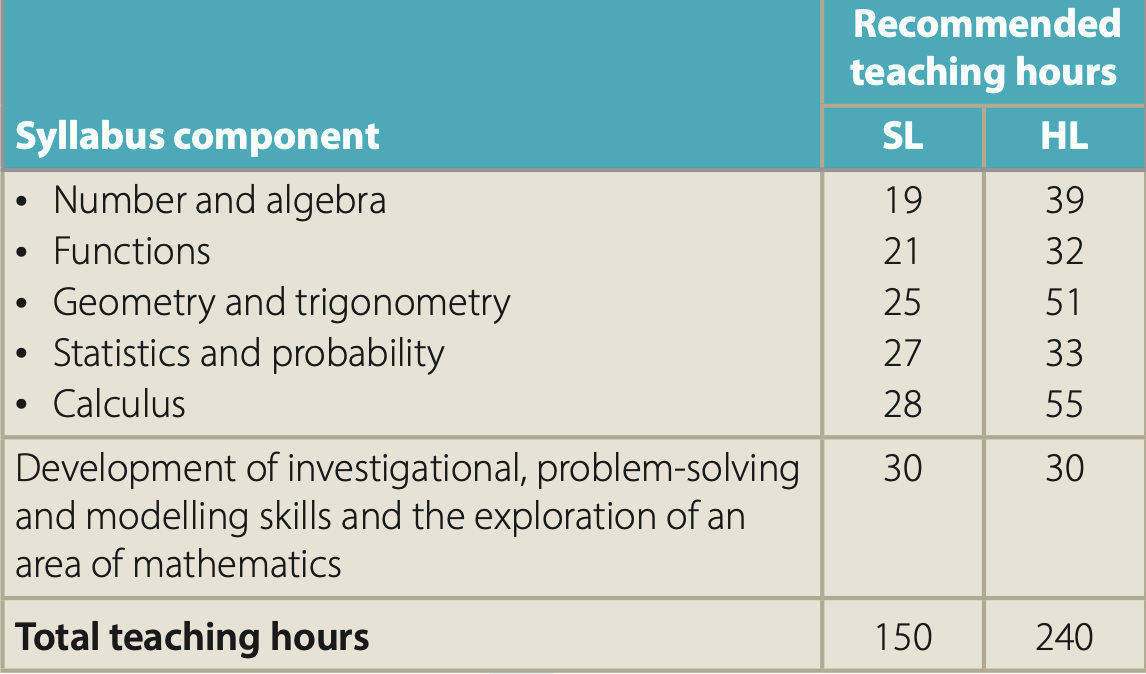 Image Source: IBO
The IBO provides students with a full list of IB courses for reference. However, students and parents should be aware that NOT all schools offer every course on the list—especially those in the Studies in Language and Individuals and Societies groups, which are often country-specific in design. Deciding which courses to take or how to structure your choices is a significant decision, and it deserves an in-depth discussion, which we will explore further in another article.
What does the Core Components in IB Programmes mean?
The DP also includes three core elements that distinguish it from other programmes:
Theory of Knowledge (TOK): Does TOK count as an IB class? The simple answer is YES.
It is a course that challenges students to reflect on the nature of knowledge, which is taught as a standalone class by a designated TOK teacher.
To complete Theory of Knowledge (TOK), students must actively participate in class discussions, critically explore knowledge questions, and complete two assessments: the TOK Exhibition, where they analyze a knowledge question through three real-world objects, and the TOK Essay, a 1,600-word response to a prescribed title. These tasks develop analytical thinking and a deeper understanding of how knowledge is constructed and applied.
Extended Essay (EE): A research project culminating in a 4,000-word essay, which is taught through guided research, where students work independently under the supervision of a teacher who provides advice on topic selection, research methods, and essay structure.
The topic is derived from one of their chosen IB subjects, or interdisciplinary topics are allowed in certain cases, such as in the World Studies EE, where students explore global issues through the lens of two IB disciplines.
Creativity, Activity, Service (CAS): Guided by a CAS coordinator, students participate in creative, physical, and community service activities that foster personal growth. Through these activities, they work towards achieving the seven CAS learning outcomes, such as developing skills, showing perseverance, and making an ethical impact.
Students are expected to consistently engage in CAS throughout the programme and maintain a portfolio documenting their activities and reflections.
The three core elements are MANDATORY, and failing any one of them will result in not earning the IB Diploma.
How Are IB Students Assessed?
IB Courses and Cores assessments are a blend of:
- Internal Assessments (IAs): Completed during the course, these projects or essays are marked by teachers and moderated by the IBO.
- External Assessments: Final exams marked by external examiners. These are rigorous and emphasize analytical and critical thinking.
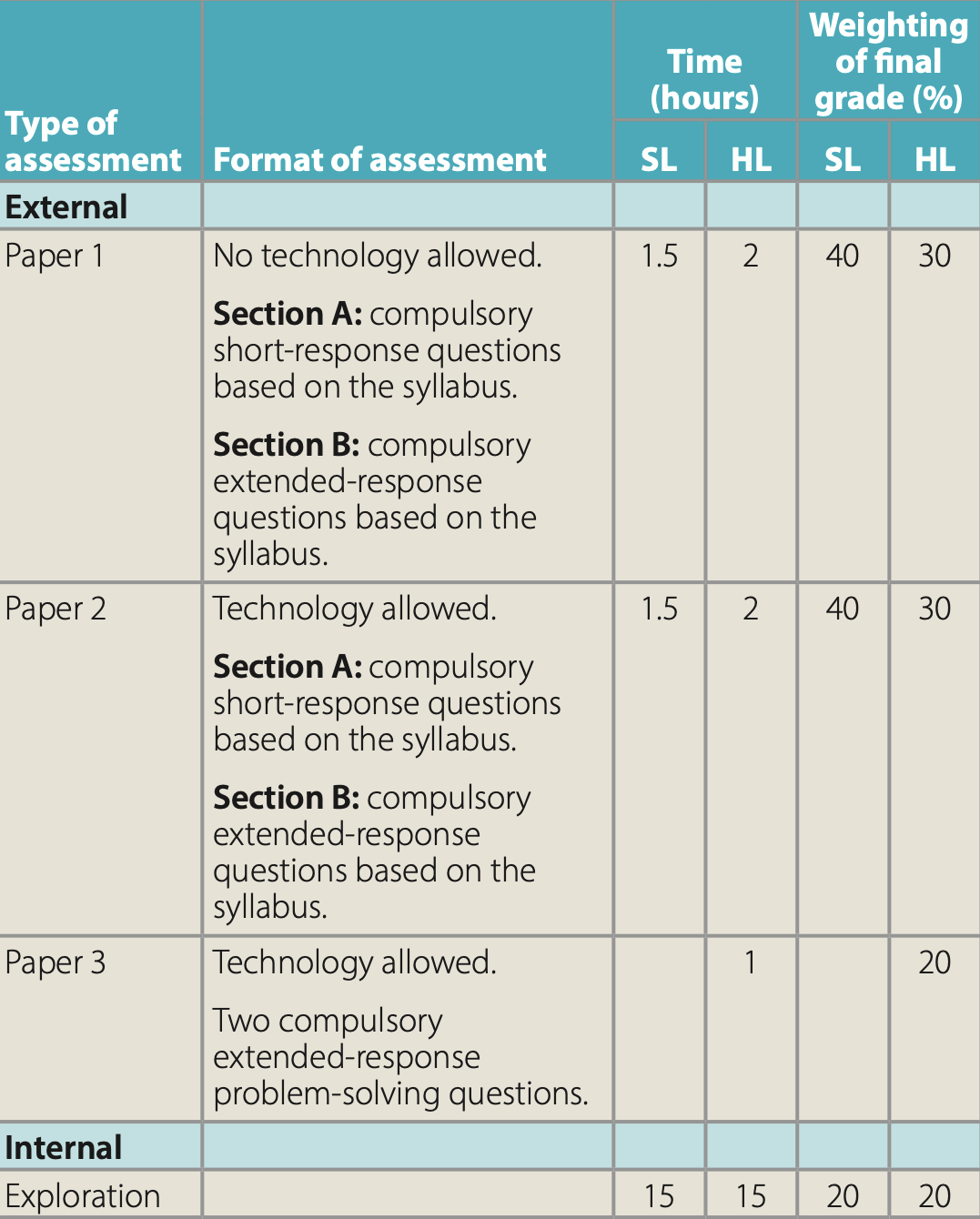 Image Sources: IBO
Take mathematics as an example, the IBDP Mathematics assessment is primarily problem-solving based, with an additional emphasis on communicating mathematical reasoning and applying concepts to real-world problems. While the IA has essay-like qualities, the external assessments (papers) heavily feature traditional problem-solving tasks. This makes the assessment well-rounded, challenging students to master both computation and critical thinking.
To prepare effectively for these challenges, you might be interested in using an online math helper that is accompanied by mathematical knowledge resources and an AI math tutor. It can assist students in their daily learning by guiding them through math problems step by step. By breaking down complex equations, clarifying concepts, and strengthening logical reasoning, this math helper helps students build a strong foundation and gain confidence, ensuring they are better equipped to tackle the demands of IBDP Mathematics assessments.
Scoring System
- The IBDP scoring system ranges from 1 to 7 for each course. A grade of 4 or higher is generally considered a "pass" for individual courses;
- 3 additional points are awarded for the core elements (TOK + EE: Combined to provide up to 3 bonus points; CAS: not scored).
Thus, the maximum possible score a student can achieve is
- 6 courses * 7 points + 3 bonus points = 45; while
- The Minimum for earning the diploma = 24
You can find the Best IB schools by score(IBDP) in the world to understand the threshold of being top-performing institutions. However, you must still wonder, what does the score mean when it comes to college applications? Let’s now explore how the IBDP is recognized and valued by higher education institutions globally.
University Acceptance
In the US
The IB diploma is highly regarded by American universities. In the US, 616 universities and colleges accept the IBDP, 128 accept the IBCP, and 464 accept individual IB courses (often in conjunction with AP or other programs). Many institutions grant college credit or advanced standing for strong IB scores. Schools like Harvard, Stanford, and UC Berkeley often view IB students as well-prepared for rigorous academic environments. You can use this tool to check what are the universities accept IB diploma in the world.
You might now be wondering: what IB score makes a student a strong candidate for top higher education institutions? Generally, good universities expect a score of 30 or higher. Scores in the range of 38–40 position students as strong candidates for competitive programs at elite schools, while top-tier institutions like Harvard or Stanford often look for scores of 40+ alongside additional qualifications and achievements.
In Europe
European universities highly value IB for its rigorous curriculum. In countries like the UK, Germany, and the Netherlands, IB scores often serve as direct qualifications for undergraduate admission.
What does direct qualification mean? If you’re a non-European resident or citizen and hold an IB Diploma, you can gain direct access to many European universities without the need for additional entrance exams. These universities are known for their academic excellence, global recognition, and, importantly, affordable tuition fees.
However, if you’re applying to universities in the UK, a predicted IB score is required to submit your application. For top-tier institutions, admission decisions are based not only on the final score (typically over 38) but also on specific Higher Level (HL) courses, often requiring a minimum score of 6 or 7 in those subjects. Careful planning of your IB courses and scores is essential for meeting these competitive requirements.
IBCP
The IB Career-related Programme (IBCP), introduced in 2012, is the newest addition to the International Baccalaureate's educational offerings. Designed to combine academic study with practical, career-related learning over 1–2 years, the IBCP requires students to complete:
- at least two IBDP courses (assessd as IBDP courses);
- four core components: Personal and Professional Skills, Service Learning, Reflective Project, and Language Development, among which only Reflective Project is externally moderated.
- and the completion of a career-related study.
IBCP graduates often enter the workforce, pursue further vocational education, or access higher education. In the United States, 128 universities, including Dartmouth College, recognize the IBCP for admission. The program has been gaining popularity globally, with a growing number of schools adopting it to meet the diverse needs of students seeking a blend of academic and career-focused education.
Summary
Embarking on the journey of the *IB Diploma Programme or any other challenging curriculum is an exciting but demanding decision. Choosing the right combination of classes tailored to your strengths and academic goals is the key to managing workload effectively and achieving success.
Whether you decide to pursue the IB Diploma or another academic path, Mathos AI is here to support you. As your trusted math helper, Mathos AI provides step-by-step guidance, helping you navigate complex math problems and excel in your studies. With the right tools and support, your academic goals and future success are within reach.
FAQs
-
Who fits the IB programme best?
Students who thrive in challenging, inquiry-based environments and enjoy exploring multiple perspectives are ideal candidates.
-
Can I study the IB curriculum online?
Some schools offer online IB courses, but this depends on your location and specific programme requirements.
-
As a student from the US, does an IBDP diploma also grant me direct access to European universities?
Of course, it doesn't matter where you get your IBDP Diploma, as long as you've got one, you get direct access to many European universities with much more affordable tuition fees compared to the US, plus overseas experiences. You can use this tool to check what are the universities accept IB diploma in Europe.
-
Do I need to attend the 12 year programme to achieve the IB diploma?
Not necessarily, the MYP programme can indeed help a student to lay solid foundations and develop skills to cope with the heavy workload in the DP stage. Particularly, for students, whose first language was not English, may benefit a lot more in the MYP stage.