
Unlocking the Mystery of Scientific Notation: A Simple Guide for Students
Saturday, October 12, 2024
Have you found yourself frustrated and overwhelmed by having to write out huge or small numbers? You're not alone! When I first had to do with numbers that seemed unapproachable without losing my mind, I remember struggling with this. Enter scientific notation, which plays an important role in how we deal with these numerical giants.
Scientific notation simplifies our lives by allowing us to express big and small numbers clearly and concisely. Whether you're calculating the speed of light or measuring the size of a single atom, understanding scientific notation can make a world of difference. In this guide, I'll break down the essentials of scientific notation, making it easier to grasp, and apply a powerful scientific notation calculator in your studies. Let’s dive into the fascinating world of scientific notation together!
What is Scientific Notation?
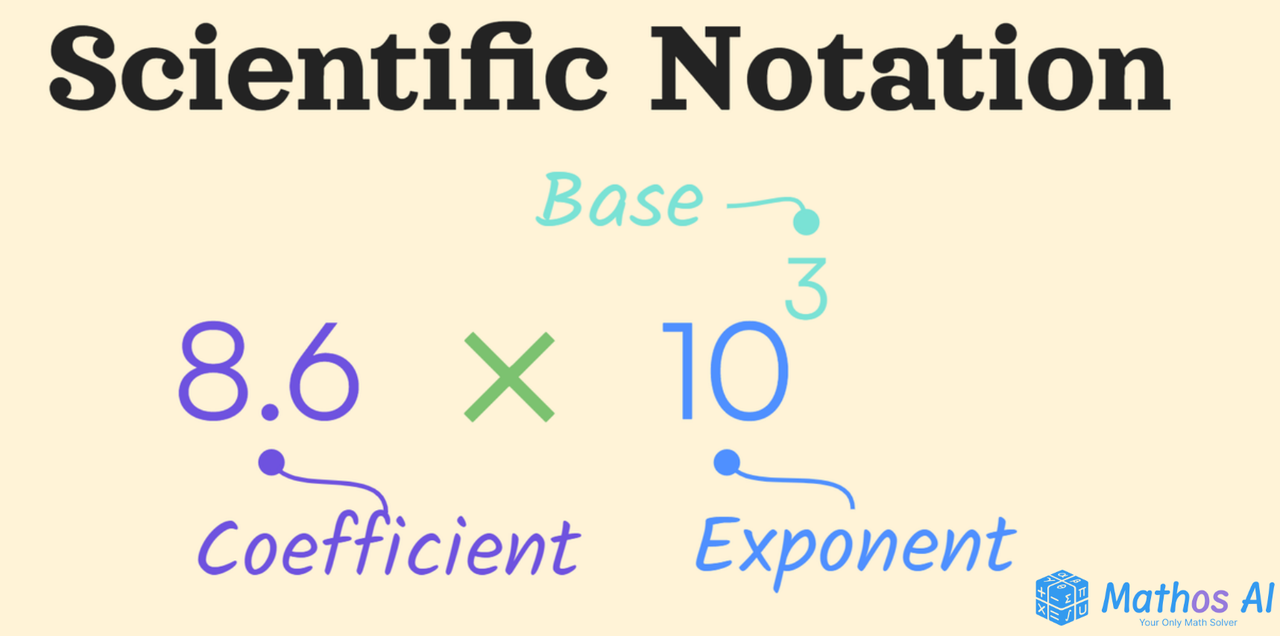
Scientific notation is a clever way to express large or tiny numbers. Instead of writing out long strings of digits that can quickly become a headache, scientific notation allows us to write these numbers in a more manageable form. In the UK they might also refer to it as standard form, scientific form, or standard index form. In its essence, scientific notation breaks down a number into two parts: a coefficient and a power of ten. It is easier to handle math calculations (and much more so in science, engineering, and math). For example, instead of 3,560,000, you might simply write:
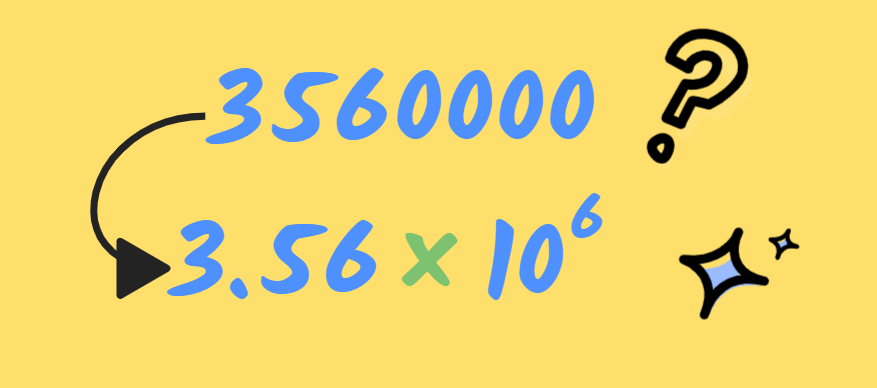
This method is good when the numbers you are working with are spread all over the place referred to as 'nuh pow', which could be thousands of times larger than one, or a million times smaller than one.
How to Do Scientific Notation
Learning how to work with scientific notation is easier than it sounds! Here’s a quick step-by-step guide to converting standard numbers into scientific notation:
-
Find the Coefficient: Move the decimal point in your number until only one non-zero digit remains to the left of it. This digit becomes your coefficient, .
-
Count the Moves: Count how many places you shifted the decimal. This number will be your exponent, .
- If you move the decimal to the left, is positive.
- If you move it to the right, is negative.
- If you didn’t move the decimal at all, equals zero.
-
Write it Out: Put it all together in the format.

For example, if you start with , you move the decimal three places to the left to get:

Not only does this make working with big numbers a lot simpler, but it also helps keep your calculations neat and organized.
FAQs about Scientific Notation
You might wonder why we bother with scientific notation at all. In the scientific and engineering fields, people often deal with numbers, which can go from microscopic to astronomical. For instance, considering the speed of light or the size of an atom—both are challenging to express without scientific notation. This notation simplifies our lives, helping us discuss complicated things without being trapped in mind-consuming symbols.
What Grade Does Scientific Notation Start?
Scientific notation typically comes into play around middle school, often in grades to 8. Students here learn to recognize and use this notation to solve more advanced mathematical problems, including growth and decay.
What are Three Examples of Scientific Notation?
Here are three examples to illustrate how scientific notation works:
- Example 1: The distance from the Earth to the Sun is about miles, which can be written as

- Example 2: A hydrogen atom's size is approximately meters, or:

in scientific notation.
- Example 3: The speed of light in a vacuum is around miles per second, expressed as:
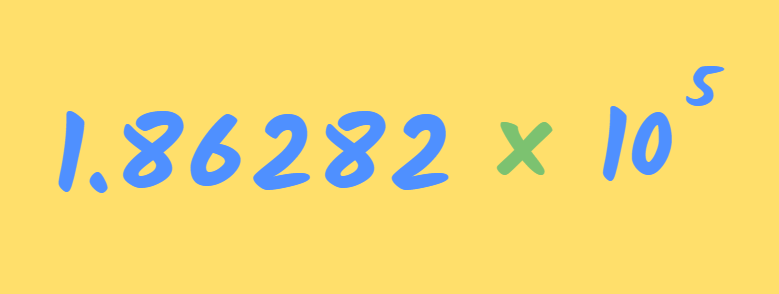
miles per second in scientific notation.
These examples highlight how scientific notation can simplify extremely large or small figures.
Scientific Notation Converter with Steps
If you want to convert numbers between standard form and scientific notation easily, a scientific notation converter can be your trustworthy buddy. Here’s how it usually works:
- Input the Number: Enter the number you want to convert. This could be a large number like 1000000 or a small decimal like .
- Select the Conversion Type: Choose whether you want to convert to scientific notation or from it.
- View the Result: The converter will display the number in the desired format, such as:

It is a great tool for saving time and reducing errors while you deal with numbers of this kind. Fortunately, all math calculators are available on Mathos. You are free to use the Mathos calculator to solve your math questions.
Scientific Notation to Decimal, Real Number
Converting from scientific notation back to standard form is just as straightforward. Here’s how you do it:
-
Identify the Exponent: Look at the power of ten in your scientific notation.
-
Move the Decimal: If the exponent is positive, shift the decimal point to the right. If it's negative, move it to the left.
-
Count the Moves: The number of places you move the decimal corresponds to the exponent.
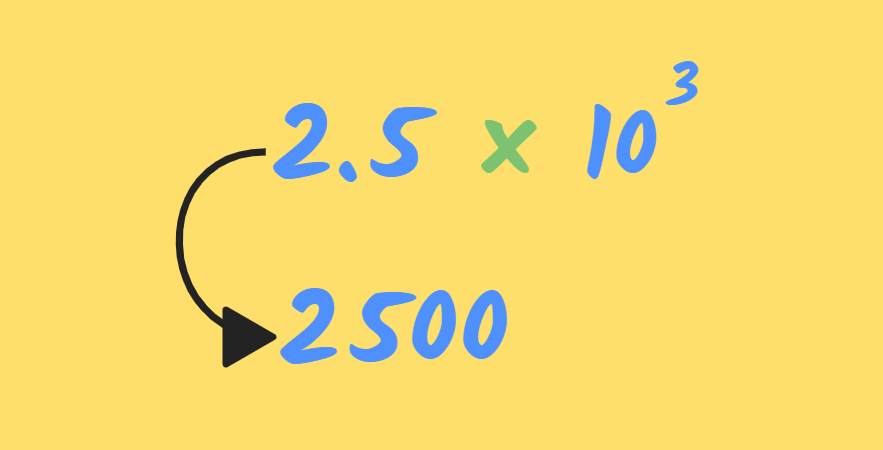
For example, converting

involves moving the decimal three places to the right, resulting in .
Conversely,
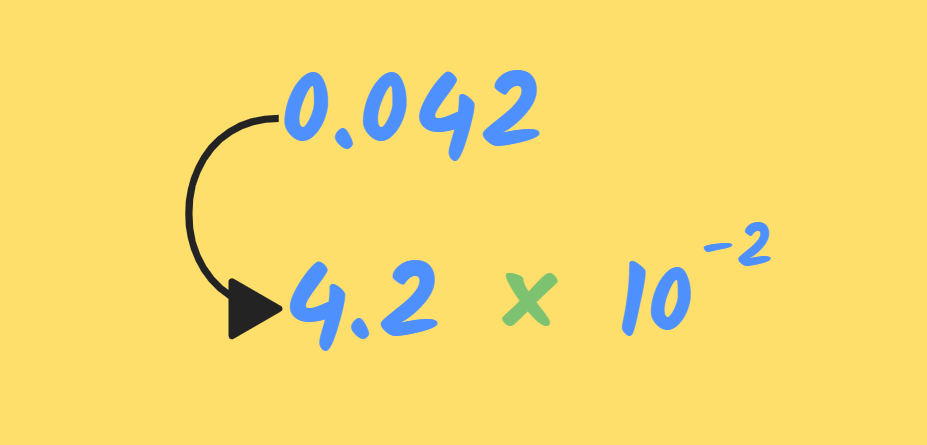
becomes by shifting the decimal two places to the left.
Additional Resources
As we wrap up our journey through the intriguing realm of scientific notation, I hope you now feel more confident in tackling those big and small numbers that once seemed daunting. Understanding scientific notation isn’t just a skill; it's a superpower that can make math less intimidating and a lot more enjoyable. However, if you still struggle with scientific notation or any other math concepts, don’t worry! Here’s how to get started with your all-in-one math solver - Mathos AI: all you need to do is enter your math question or snap a photo of your math homework. Mathos AI even helps construct formulas through voice or keyboard input! After that, just click the 'Solve' button, and you’ll receive an accurate answer, a detailed, step-by-step breakdown of how to approach scientific notation, and more, just like this:
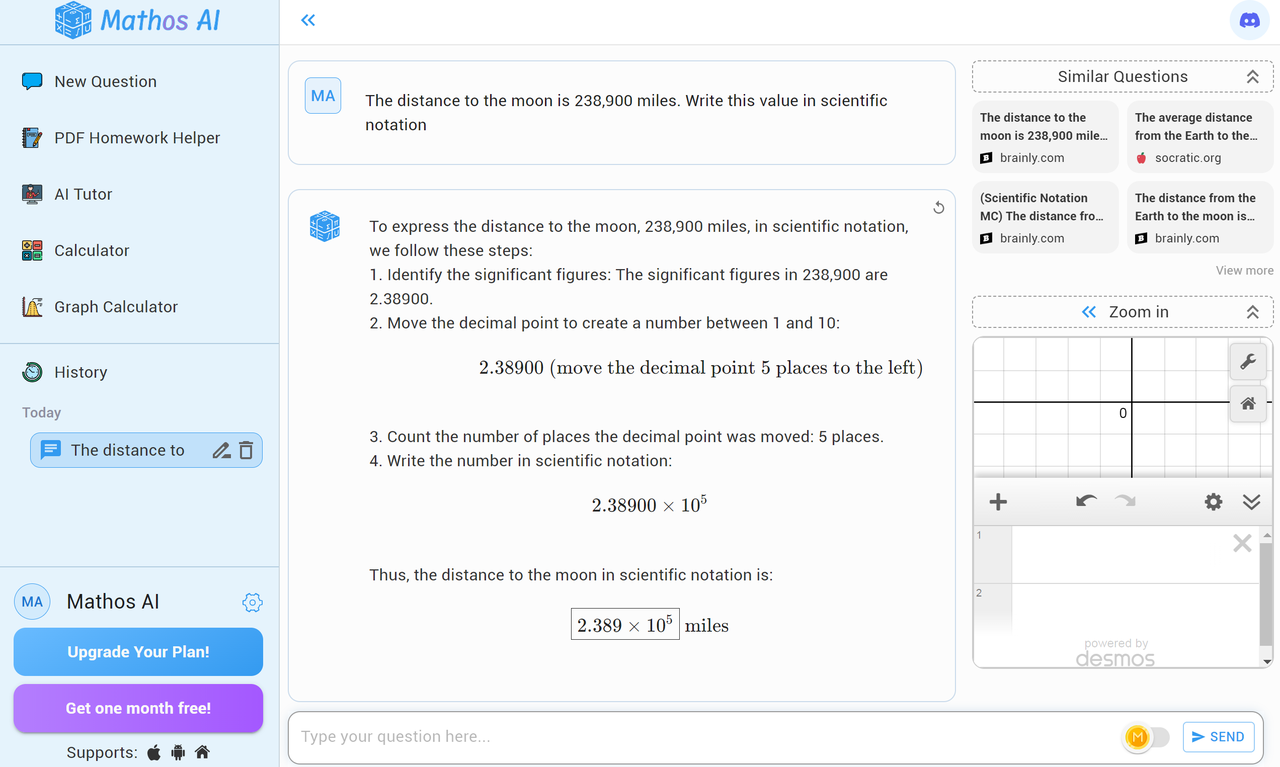
By using Mathos AI, you can gain a deeper understanding of scientific notation and other mathematical concepts, all tailored to your unique learning style. If I can, why should you have to struggle on your own? Immerse yourself in math confidently, and let your scientific calculator help you enjoy the art of scientific notation and beyond!