
A Complete Guide to Parametric Equations: What They Are & How to Use Them
Saturday, November 16, 2024
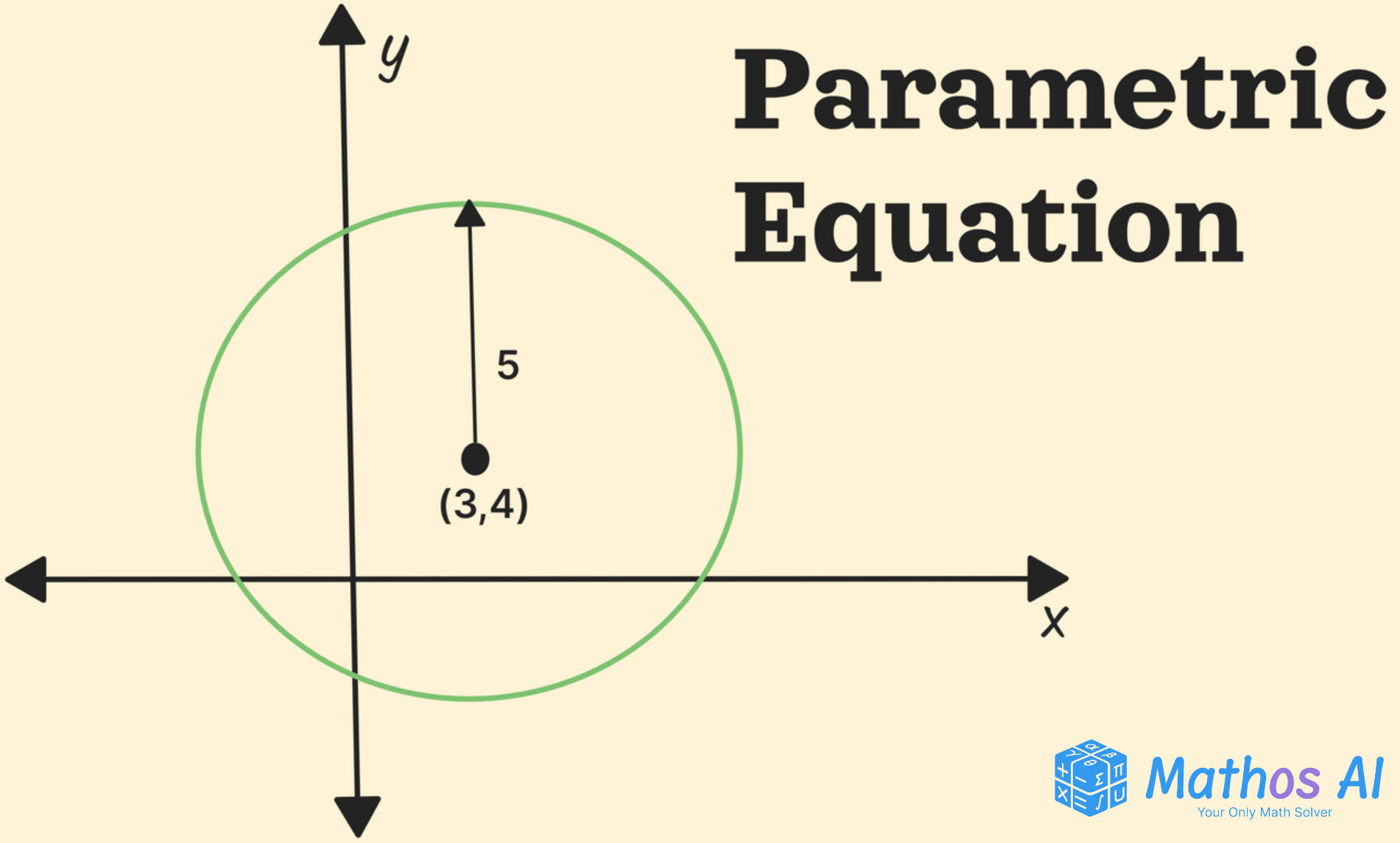
How often have you dug into a math problem where you are stuck trying to say what a curve or surface looks like? If you’ve never been able to understand the full picture in conventional equations, you are not alone. Parametric equations might be the solution you've been searching for. Unlike regular equations, parametric equations allow us to describe curves, paths, and movements more flexibly.
I know, math can be intimidating, especially when faced with terms like parametric equations. Trust me, once you understand how they work, it’ll change how you think about graphs and geometry. Whether you’re a student struggling to plot complex curves or a professional who needs a deeper understanding, parametric equations are the key to unlocking problems that traditional equations can't handle. By the end of this guide, you'll know what parametric equations are and how to find them, graph them, and even solve complex systems using parametric equations. Ready to dive in? Let’s break it down together!
What is a Parametric Equation?
Parametric equations are a special type of equation in mathematics where two or more quantities are expressed as functions of one or more variables called parameters. Rather than being restricted to the typical form, parametric equations allow us to break free from this format. Especially convenient for describing more complicated shapes, such as curves or surfaces, parametric curves, and parametric surfaces are curves and surfaces that are parametric. Let’s say we’re thinking about a circle. If you’ve ever done geometry, you know that the standard equation for a circle centered at the origin with a radius is:
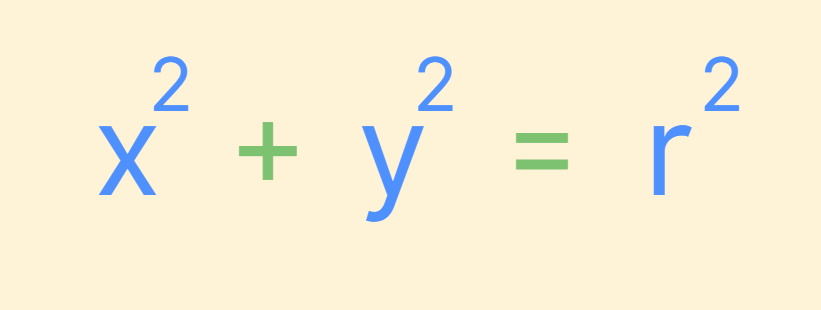
Although it’s not very easy to work with in all situations (if one wants to describe the circle fully), here, parametric equations shine. By expressing and as separate functions of a parameter , we can describe the entire circle effortlessly.
For instance:
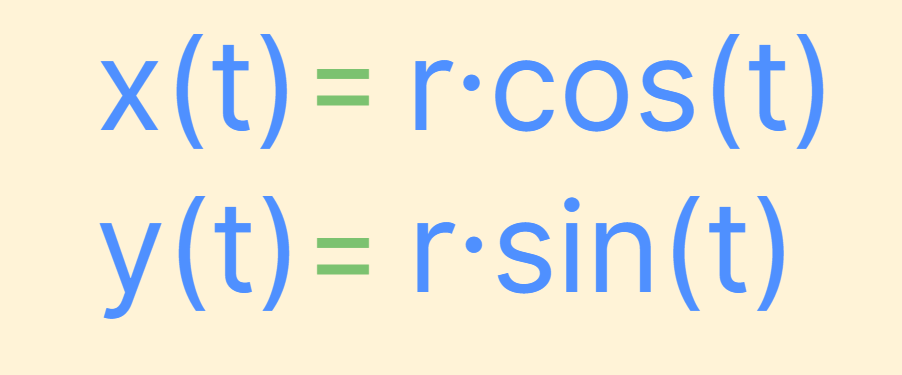
Now, instead of juggling the constraints of standard forms, we can describe each point in the circle as t changes from to .
How to Find Parametric Equations
Finding parametric equations might sound tricky at first, but once you grasp the concept, it becomes much more intuitive. In other words, what we want to do is replace each coordinate ( and ) in terms of others (being one or more independent variables like ). Let’s break down the steps:
- Identify the relationship between variables: For instance, if you’re working with a circle, you already know that the equation is:
From this, you can figure out how to express and separately.
-
Choose a parameter: In most cases, is used as the parameter. It could represent time, angle, or some other independent variable that changes throughout the equation.
-
Express each variable as a function of the parameter: For the circle example, the parametric equations are:
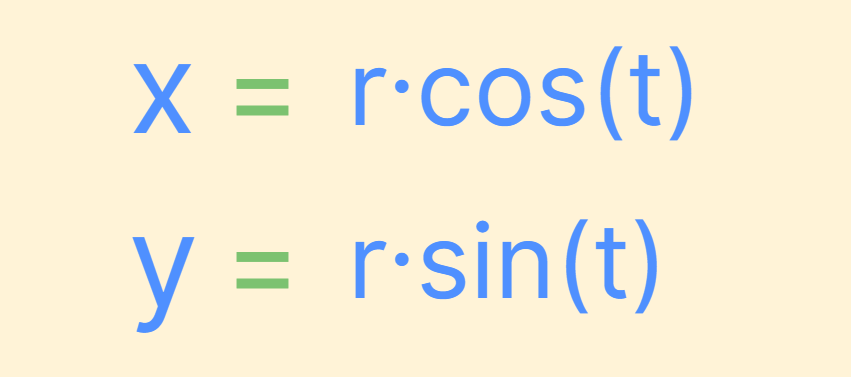
where t represents the angle, and as it varies, the equations describe the whole circle.
Sometimes, parametric equations are more than just a clever way to represent curves or surfaces. As well as allowing us to describe motion. Imagine that projectile moving through the air. Two functions can describe its position: it had one for its horizontal distance and one for its vertical distance. Both of these are functions of time, making parametric equations the perfect tool to describe such motion.
How Do You Graph Parametric Equations?
Graphing parametric equations is slightly different from graphing typical equations. With parametric equations, you’re dealing with two functions—one for each variable (say and ). Here’s how you can graph parametric equations:
-
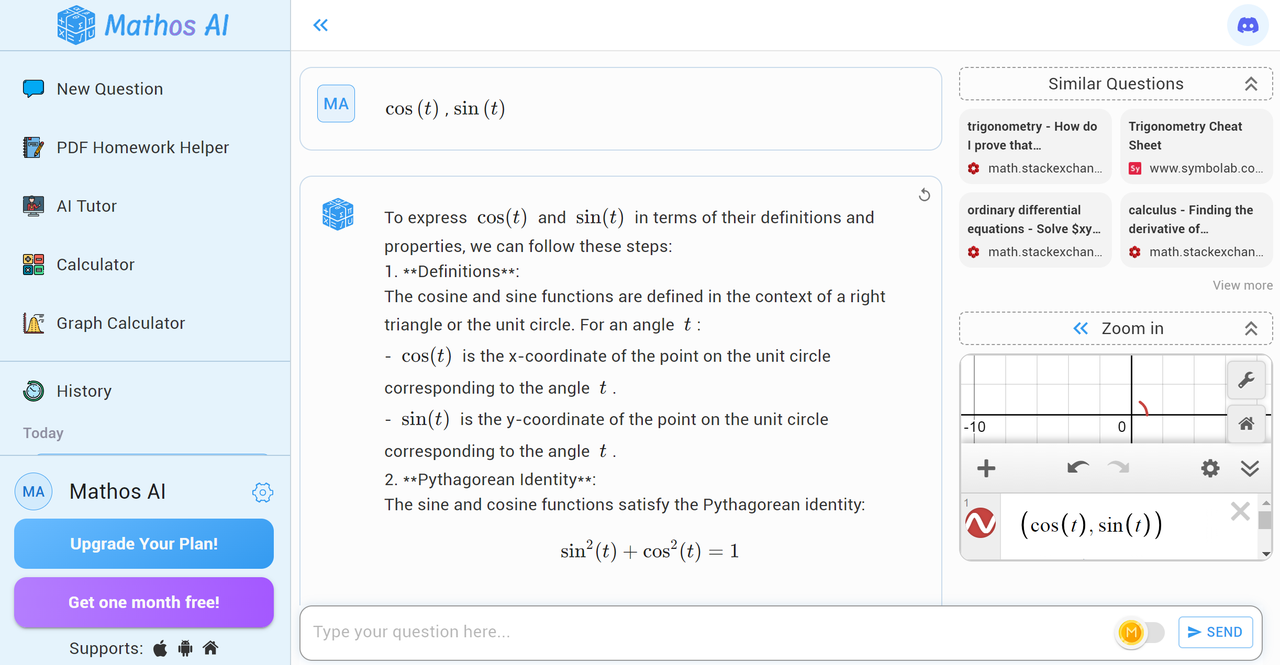
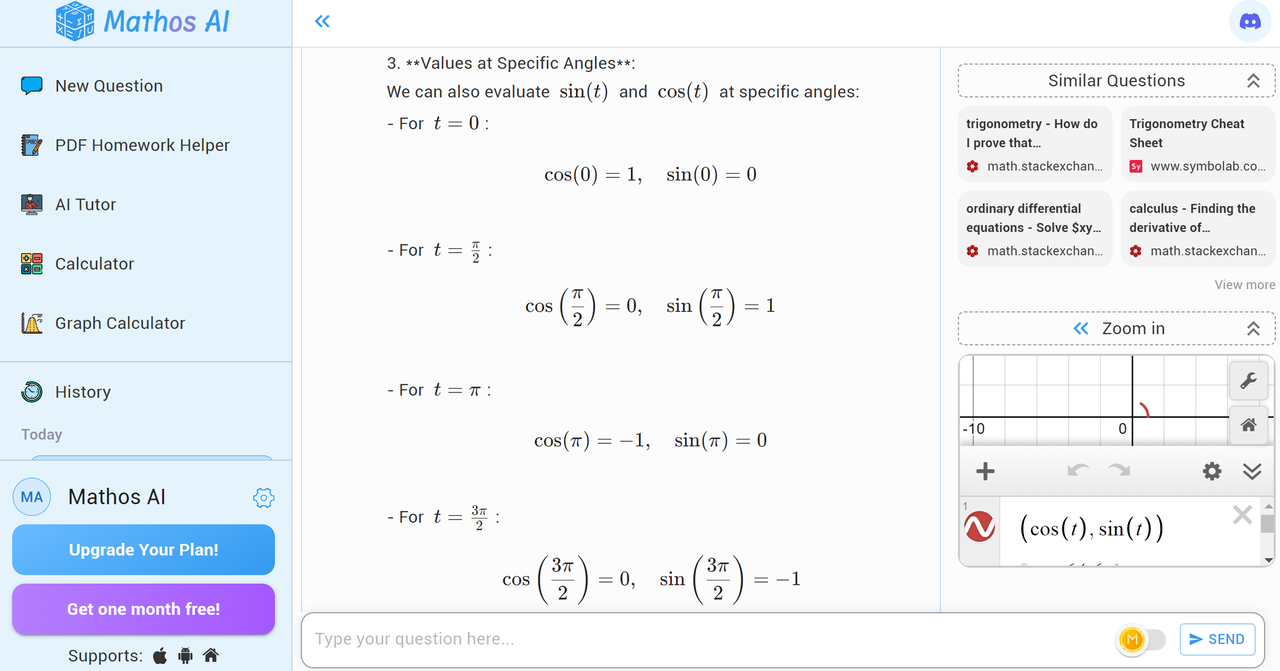
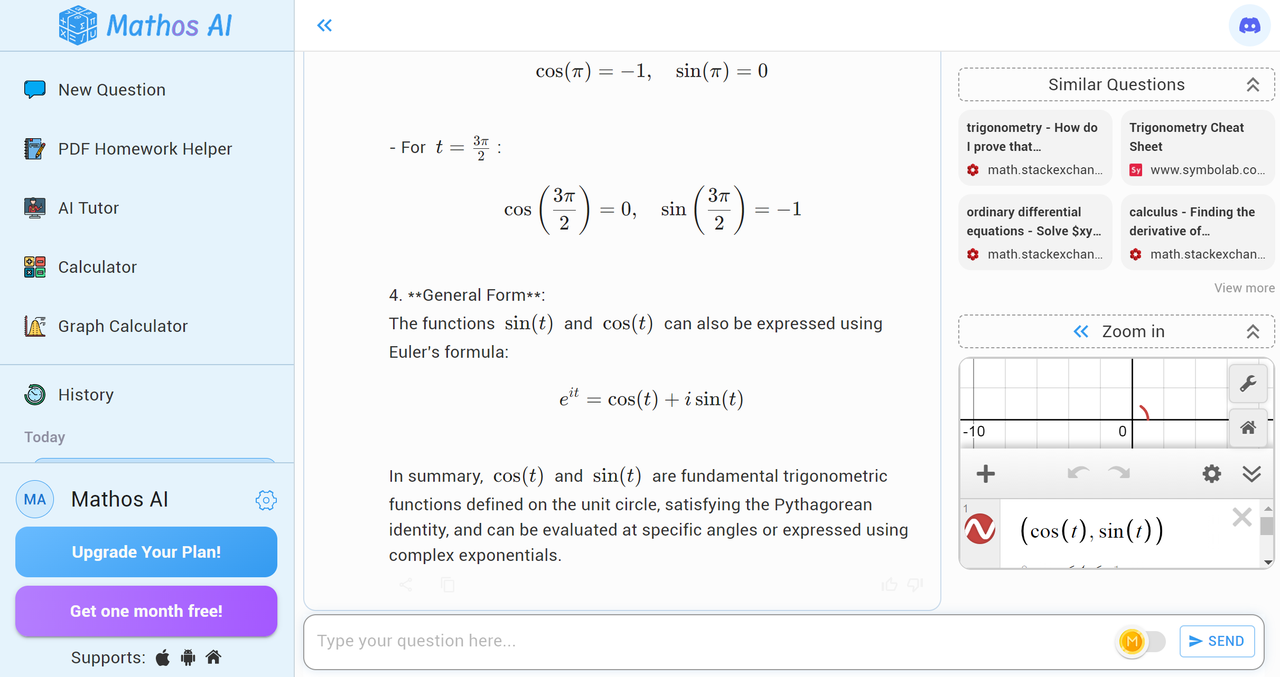
Create a table of values: Start by choosing a set of values for . Then, calculate the corresponding values for both and .
For example: ,
-
Plot the points: Once you’ve got your table of values, plot the points (,) on a coordinate plane.
-
Connect the dots: After plotting several points, connect them with a smooth curve. If your parametric equations describe a curve (like a circle), the result will be a continuous, smooth line.
For more complex parametric equations, using a parametric equation graphing tool—which can be a graphing calculator or an online tool—can make the process faster and more accurate. If you're working with 3D parametric equations, a graphing tool is almost essential. These tools allow you to input parametric equations and visualize the corresponding curves in 2D or 3D.
How to Solve a Parametric Equation
When it comes to solving parametric equations, the method you use depends on what exactly you want to solve for. You may sometimes have to get rid of the parameter (usually ) so that you get a single equation having and alone. Other times, you might be looking to solve the system of parametric equations as a whole. Let’s break down the process.
- Eliminate the parameter: If your goal is to eliminate the parameter, you’ll need to solve one of the parametric equations for , and then substitute that into the other equation. For example, if you’re given the parametric equations: , you can solve for in terms of one variable and substitute it into the other.
-
Solve as a system: In some cases, particularly when dealing with motion or physics problems, you may have two or more parametric equations describing different aspects of a situation. You’ll have to make these into a system of equations, you can either use substitution or elimination. Say, for example, in projectile motion, the vertical position of the object is given by one equation and the horizontal position by another equation as both are functions of time. This will let you find out when and where the object will be at the given point.
-
Use a parametric equation calculator: If you’re working with more complex parametric systems or are just looking to speed up the process, a parametric equation calculator can be incredibly helpful. These tools allow you to input your parametric equations and instantly get solutions, graphs, and even detailed step-by-step explanations of the solving process.
What's the Equation for Success? It’s Parametric—and Maybe a Little Mathos AI
Well, there you have it! Parametric equations aren’t as intimidating as they seem, right? Whether you're plotting the path of a flying object, describing a curve in space, or just trying to get through your next math class, parametric equations give you the tools to do it all. These might seem like figuring out a maze to wrap your head around, but with a bit of patience (and, perhaps a hint or two), you will make it through. If by now, you’re still thinking, “Okay, but how are we supposed to make sense of this?” Math can be overwhelming at times, especially when you're learning new concepts like parametric equations. Unfortunately, however, you don’t have to do that alone! Meet Mathos AI (formerly MathGPTPro), which is a lot more than a Math problem calculator, your math-solving assistant to help you thoroughly understand math concepts and step-by-step solutions to math questions. With Mathos AI, whether you’re a student and need homework help, a teacher wanting to add a new dimension to your lesson plans, or just a startup, Mathos AI is the solution for you and your homework helper. With detailed, step-by-step solutions and an interactive approach to learning, Mathos AI will help you master those pesky parametric equations in no time. Maybe you need to graph something complex? Or maybe you are just making sure you work? A math graph calculator in your pocket is Mathos AI. No more guessing, no more crying, get clear explanations and an instant solution. Don’t waste time stressing over your next math assignment; Mathos AI can be right there by your side to solve what we can not and make math a little less scary. If you are trying to master parametric equations with an AI tutor, try Mathos AI today!