
Can You Take 4 HL Courses in IB? A Strategic Guide to Selecting IB Courses for College Applications
Wednesday, February 5, 2025
Choosing IB courses is a pivotal decision that shapes your high school experience, university options, and career path. A common question students ask is: Can I take 4 Higher Level (HL) courses in the IB program? The answer in short is YES, as stated on the IBO official site:
Each student takes at least three (but not more than four) subjects at higher level, and the remaining at standard level.
While the IB allows up to 4 HLs, this choice requires careful consideration of workload, university requirements, and personal strengths. This guide breaks down the IBDP structure, university expectations, pros and cons of 4 HLs, and actionable steps to craft a balanced course plan.
Understanding the IBDP Structure
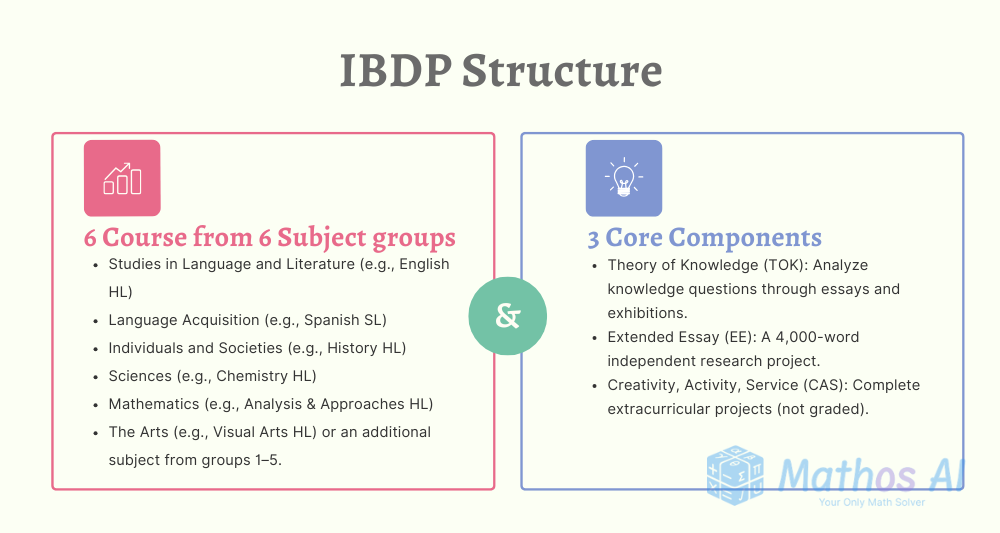
The IB Diploma Programme (IBDP) is a rigorous, globally recognized curriculum designed to foster critical thinking and academic versatility. We've dived into it in a previous article and will just briefly recap here:
Diploma Requirement:
- Take six courses: Higher Level (HL) & Standard Level (SL).
- Complete all core components (TOK, EE, and CAS).
- Score ≥24/45 points (no more than 3 points from TOK/EE failures).
-
University Requirements: What Top Schools Actually Look For
Generally speaking, most universities require a remarkable transcript from a balanced curriculum, which means a selection of courses that demonstrate breadth and depth across different subject areas, aligning with university expectations and a student's academic goals.
STEM Programs:Typically require Math HL and at least one science subject at HL (e.g., Physics, Chemistry). In Math, for instance, AA(Analysis and Approaches) is preferred over AI(Analysis and Interpretation).
Take Imperial College London(Mechanical Engineering) as an example. Requirements for an IB student are:
-
Minimum entry offer: 40 points
- 6 in Math HL (both AA and AI are acceptable, but AA is preferred)
- 6 in Physics HL
However, typical offer to an IB student, for example, in 2023, 80% of the IB applicants who received an offer from ICL had a 7 in both Math and Physics.
And for MIT:
-
No specific requirements are available, but ideal preparation should include calculus, physics, chemistry, biology, and four years of English (or IB Language courses at higher level)
-
And it expects ideal candidates to take the most challenging coursework available at their high school, treating their IB coursework as college level and the highest level of rigor in high schools.
Business Programs: Often prefer Math (at least SL, in Math AI) and Economics or Business Management. Business programs tend to look at courses that will provide them with the most applicable information to the field of business, like Economics and Business Management.
Again, to enter Imperial College London (Economics, Finance and Data Science), an IB student should meet these requirements:
- Minimum entry offer: 39 points
- 7 in Math HL (AA or AI, with no preference)
- 6 in a second HL subeject
- 6 in a third HL subeject
Liberal Arts Programs: Emphasize strong performance in humanities and languages. Liberal arts programmes like to see strength in language courses like English Literature and other humanities courses like History.
Take University of Cambridge (History of Art) as an example. Requirements for an IB student are:
- Minimum entry offer: 41-42 points
- With 776 in HL subjects
- Preferred subjects: History, History of Art, English (language or literature), Languages (ancient or modern), Art & Design (taken by 67% of entrants), Mathematics
And Oxford(Fine Art):
- 38 (including core points) with 666 at HL
Pros and Cons of Taking 4 HL Courses
Now that we've explored how universities assess IB courses, let's go back to the question "can I take 4 HL in IB?" Well, not everything follows "the more, the merrier" principle. While a challenging HL load can impress admissions officers, it also requires a careful balance of workload and well-being. Below, we delve into the advantages and potential drawbacks of taking 4 HL courses to help you make an informed decision.
Pros
✅ Competitive Edge: As mentioned previously, top universities value students who challenge themselves. Achieving high scores in 4 HL ubjects demonstrates intelligence, work ethic, and dedication.
✅ Flexibility for University Applications: Some universities may require specific HL subjects. Taking four HLs keeps options open for students who are undecided about their major.
✅ Potential College Credit: Scoring 6-7 in HL subjects may allow students to skip introductory college courses, particularly in Math HL.
Cons
❌ Heavy Workload: HL courses demand 90 extra hours per subject. Student testimonials often cite burnout.
❌ Grade Risks: Spreading effort thinly may lower overall scores, whereas college admissions officers usually prefer three strong HL scores (7s) over four weaker ones (5s).
❌ Neglected Core Components: Managing TOK, EE, and CAS alongside 4 HLs stretch your time and energy thin. Struggling to meet deadlines is not uncommon. Remember: failing to complete core requirements could jeopardize the diploma, even if your subject grades are stellar.
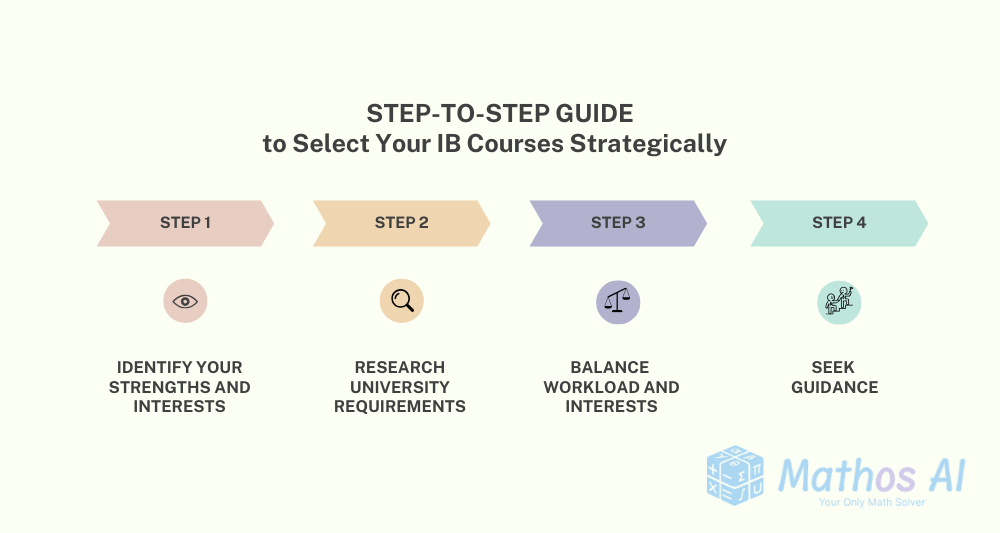
Step-to-Step Guide to Select Your IB Courses Strategically
While taking four HL subjects presents both opportunities and challenges, the key is making a decision that aligns with your long-term academic and career aspirations. Understanding the pros and cons is just the first step—now, let's explore a structured approach to choosing the right IB courses for your unique strengths and goals.
Step 1: Identify Your Strengths and Interests Assess your academic strengths and personal passions. Ask yourself: What subjects do I enjoy, and which ones align with my career goals?
Step 2: Research University Requirements Look up the admission criteria for universities you’re interested in. Check if specific subjects or levels (HL vs SL) are mandatory for your intended major.
Step 3 : Balance Workload and Interests Select subjects that challenge you but also allow you to perform well. Balance between HLs that are critical for your goals and SLs you find manageable or enjoyable.
Step 4: Seek Guidance Consult your IB coordinator, subject teachers, or academic advisors. Talk to seniors who’ve been through the IB program for real-life insights.
Follow-up Actions for Success
Study Planning
Creating a detailed study plan is essential, especially if you’re taking 4 HLs, structure your study schedule effectively:
-
Track Internal Assessments (IAs), EE milestones, mockup and final IB exams.
-
Use tools like IB course planners and study apps to manage time efficiently.
Resources
-
Use online platforms like Khan Academy or IB-specific resources for extra support.
-
Consider hiring a tutor for challenging subjects like Math HL or Physics HL.
-
Look into specialized math helpers if you struggle with Math HL topics.
Adjust Early
-
Speak with your IB coordinator as soon as possible if you feel a course isn’t the right fit for you.
-
Subject changes are possible, but they must happen early in Year 1.
-
Drop a HL if grades dip below 5.
Strategic Insights for IB Course Selection: Balancing Ambition and Practicality
Selecting your IB courses is a crucial step that shapes your academic journey and college prospects. While taking 4 HLs can give you a competitive edge, it’s important to balance ambition with practicality. Prioritize subjects aligned with your goals, track university requirements, and seek guidance when needed (Mathos AI is here to assist with all your IB math challenges).
Remember: Quality over quantity often leads to success in the IB.