
Everything You Need to Know About AP Precalculus
Thursday, January 23, 2025
AP Precalculus was added to the AP curriculum for the 2023/24 school year (announced by the AP Central) to prepare more students for success in college mathematics and STEM fields. So what is AP Precalculus? How does AP Precalculus help high school students get ready for college-level math? Who should take AP Precalculus? How is the course organized? What credit do students receive for taking AP Precalculus? You'll find everything you need to know about AP Precalculus in this comprehensive guide.
What is AP Precalculus
AP Precalculus is an Advanced Placement course designed to be equivalent to a first-semester college precalculus course that covers topics including polynomial and rational functions, exponential and logarithmic functions, and trigonometric functions.
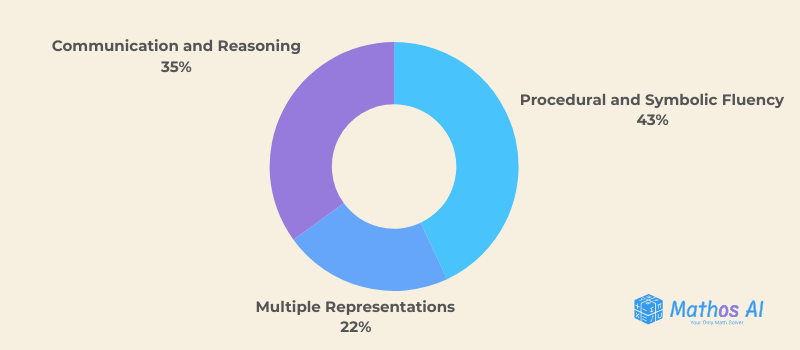
This course focuses on teaching students three essential mathematical practices: Procedural and Symbolic Fluency (about 43% of exam weight), Communication and Reasoning (about 35% of exam weight), and Multiple Representations (about 22% of exam weight).
- Procedural and Symbolic Fluency
This area refers to students' ability to accurately, efficiently, and flexibly apply mathematical procedures and manipulate symbols. In short, it tests your ability to find the easiest and quickest way to solve a math problem correctly.
Here's an easy example:
Suppose you need to solve the equation 4(x + 2) = 12.
A student with strong procedural and symbolic fluency might approach this problem in 2 quick steps:
- Step 1: Recognize that the quantity inside the parentheses (x + 2) must equal 3, since 4 × 3 = 12.
- Step 2: Quickly deduce that x must equal 1, as 1 + 2 = 3.
This example shows procedural fluency because the student quickly understood the equation's structure, solved the problem smartly by thinking about the relationships between numbers, and found the simplest path to the solution without getting bogged down in complicated mathematical steps.
- Communication and Reasoning
This area emphasizes students' ability to explain and analyze math problems. It's also important to know how to use mathematical evidence and reasoning to support your solution.
For example, you've successfully solved y = 2x + 3 and found x = 2. Now, it's time to explain the reasoning behind your solution. You might begin by stating that this equation represents a linear function. Elaborate on the significance of the slope (2), which signifies that y increases by 2 units for every 1 unit increase in x. Additionally, discuss the y-intercept (3), which indicates the point where the line intersects the y-axis at (0, 3).
Communication and Reasoning skills show your ability to think critically, solve problems effectively, and explain your solutions logically.
- Multiple Representations
This area emphasizes students' ability to present mathematical problems in different ways (graphical, tabular, symbolic, etc) and make connections between them.
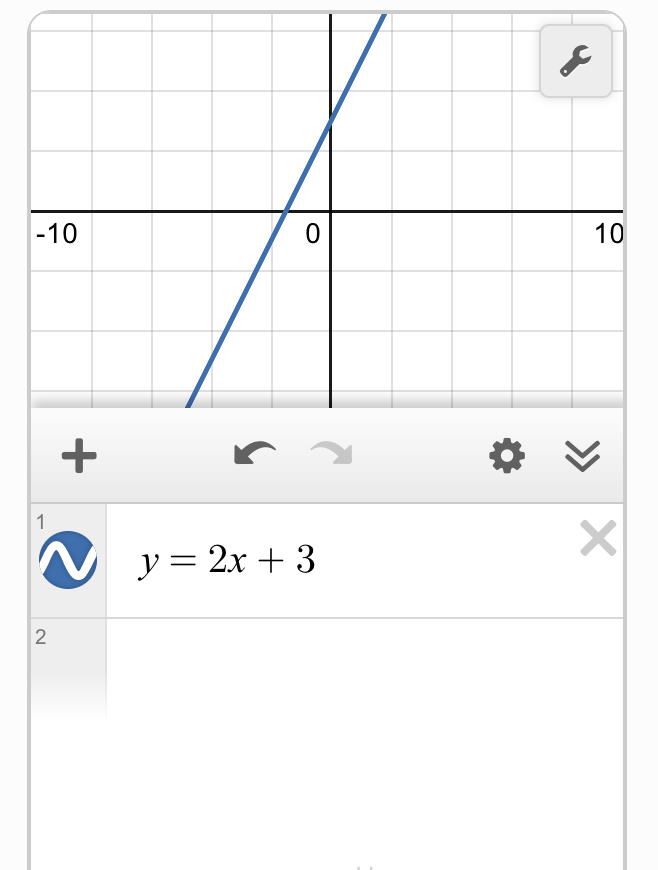
For example, there are different ways to represent this equation: y = 2x + 3.
Symbolic: This is the equation itself: y = 2x + 3
Graphical:
Tabular:
Tabular:
| x | y = 2x + 3 |
|---|---|
| -3 | -3 |
| -2 | -1 |
| -1 | 1 |
| 0 | 3 |
| 1 | 5 |
| 2 | 7 |
| 3 | 9 |
Verbal: This is a straight line with a slope of 2, which crosses the y-axis at 3.
Why Take AP Precalculus?
Many high school students take AP classes because it prepares them better for college. Here are 3 key benefits of taking AP Precalculus.
- Earn college credit and save money on college tuition
College credits can be quite expensive, normally hundreds of dollars per credit. For example, at a public university, the average cost per credit for an in-state student can range from $300 to $500. AP Precalculus can be equivalent to a semester of college precalculus, typically 3 or 4 credits. So if you do well on the AP exam and the college you apply to accepts AP credits, you can save at least $1200 on tuition.
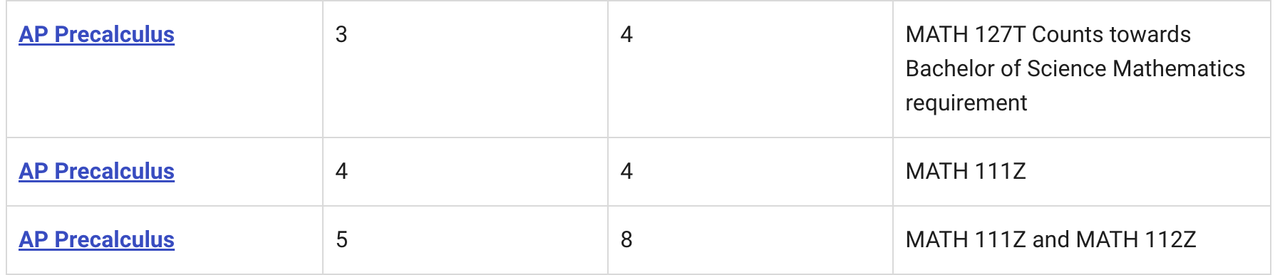
For example, the University of Oregon grants credit for AP Precalculus. Depending on your AP score, you can get 4 to 8 credits for courses like Math 127T, Math 111Z, and 112Z. If you score 3 or 4, you can earn 4 credits, and if you get a 5, you can get 8 credits.
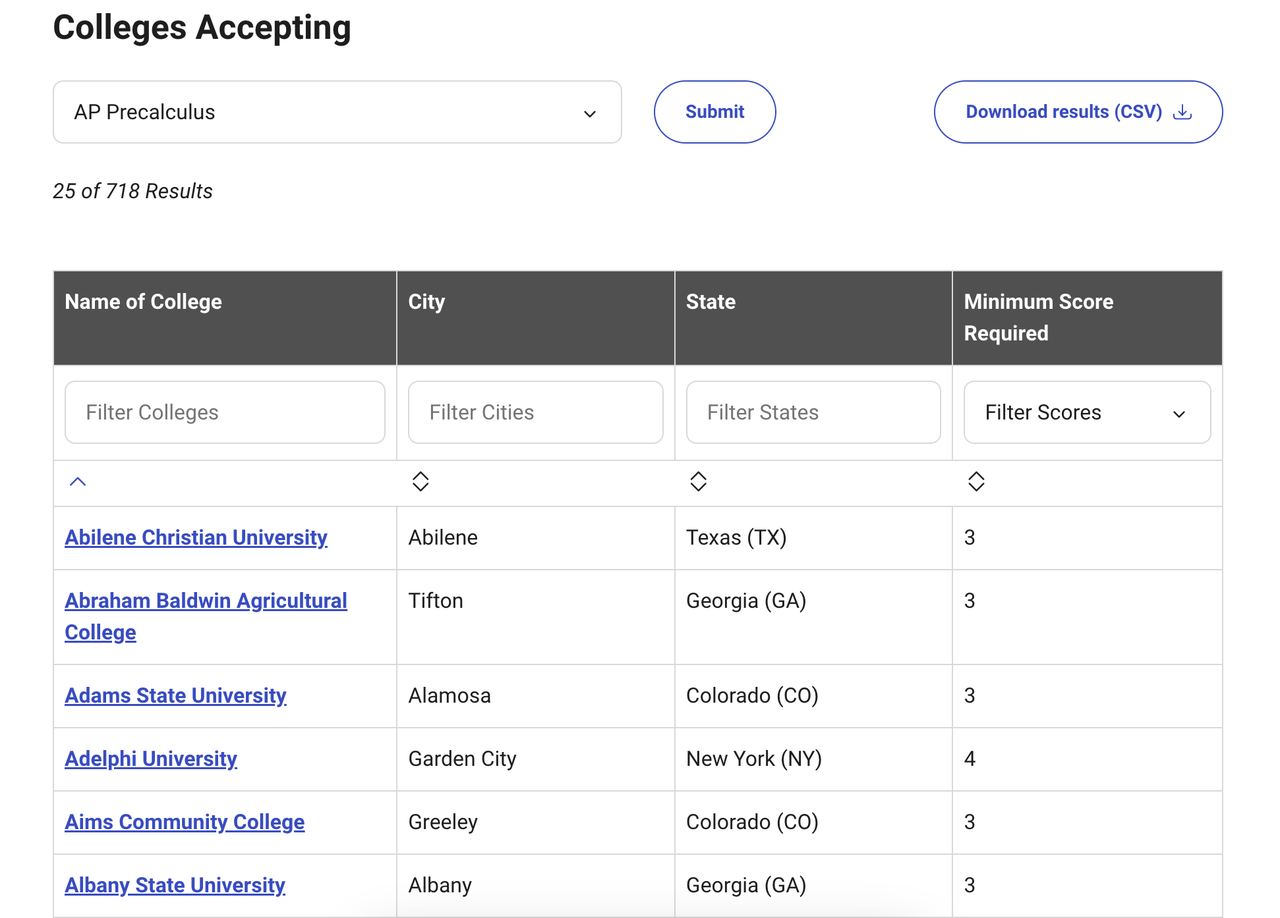
If you want to know which college accepts AP credits, check the AP Policy of the college you apply for using the College Board's AP Credit Policy Search. Simply select the AP course, and you'll see a list of universities that give credit to the course and the minimum AP score required.
- Enhance college application chances
Enrolling in AP Precalculus shows you're serious about building a strong math foundation and are willing to take the academic challenge.
Unlike regular Precalculus, AP Precalculus goes deeper into real-world applications, such as modeling phenomena in physics or economics. If you're applying to STEM-focused programs like engineering or data science, success in this course demonstrates that you can handle rigorous academics, which can set you apart from other applicants who don't take AP math.
- Prepare for advanced math courses
AP Precalculus provides an excellent foundation for AP Calculus AB, AP Calculus BC, and college-level mathematics by introducing students to key concepts fundamental to more advanced mathematical studies.
For example, a crucial concept that AP Precalculus introduces is the idea of limits, which is a cornerstone of calculus.
In AP Precalculus, students learn to analyze function behavior as x approaches a specific value. For instance, explore the limit of f(x) = (x² - 1) as x approaches 1. In AP Calculus, the understanding of limits becomes essential when students define derivatives and integrals in calculus. The derivative, for example, is defined as the limit of a difference quotient. Then, in college-level physics or engineering courses, students apply this knowledge to calculate instantaneous velocities or rates of change in various systems.
Who Should Take AP Precalculus?
So who is eligible for AP Precalculus? Can anyone take it? Although it's a basic AP math class designed for a broad range of students, there are some prerequisites to taking this course. AP Precalculus is ideal for:
- Students who have completed Algebra 2 or Integrated Math 3
- High school juniors and seniors seeking a challenging math course
- Students planning STEM majors or careers
- Those wanting to build a strong foundation for AP Calculus or college-level mathematics
- High-achieving students looking to strengthen their math and critical thinking skills
AP Precalculus demands sharp math skills and a solid analytical mindset. You should be comfortable with algebraic manipulation, function analysis, and problem-solving techniques. The course requires strong logical reasoning, proficiency with graphing calculators, and the ability to break down complex mathematical concepts.
AP Precalculus: Course Overview
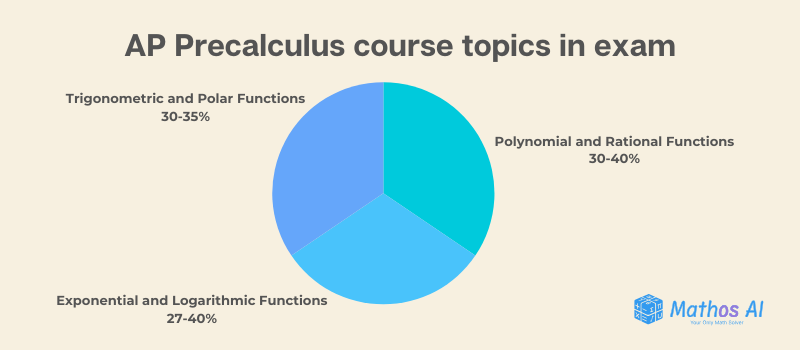
The main topics in the AP Precalculus course are structured into four units: Polynomial and Rational Functions (30-40% of exam), Exponential and Logarithmic Functions (27-40% of exam), Trigonometric and Polar Functions (30-35% of exam), and Functions Involving Parameters, Vectors, and Matrices (not assessed on the AP Exam).
- Polynomial and Rational Functions
Let's explore an example of polynomial and rational functions that's easy to understand:
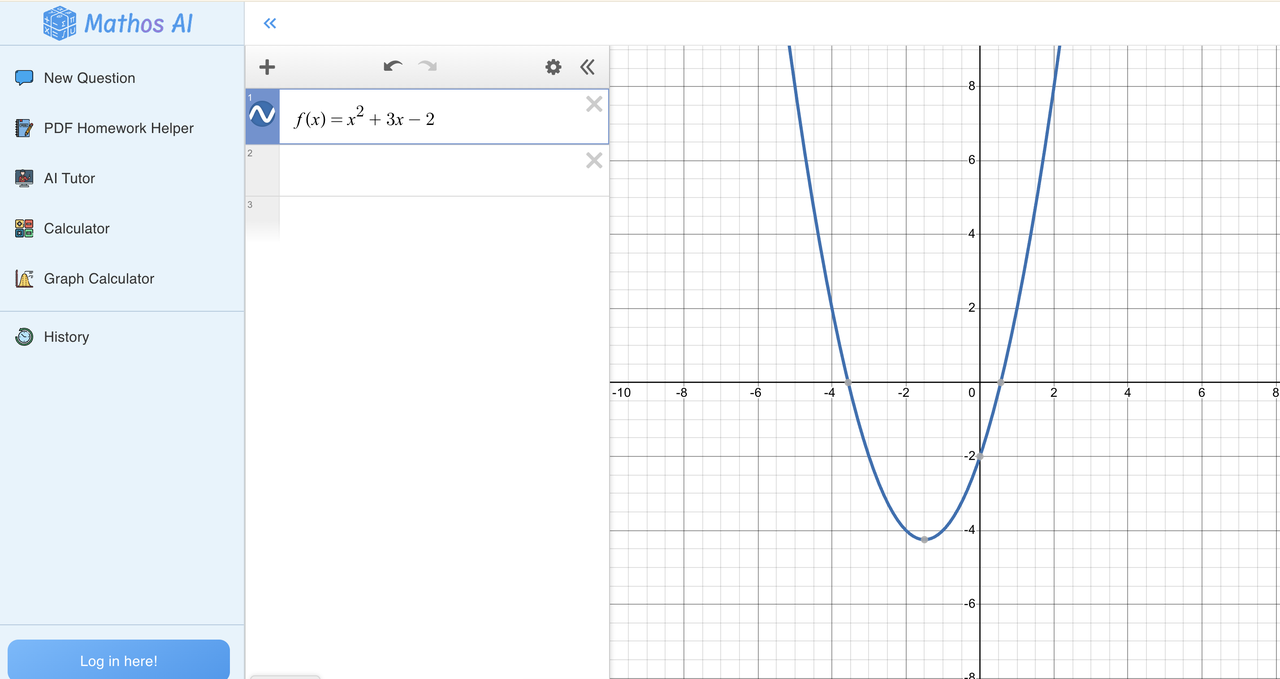
A polynomial function is an expression with variables raised to non-negative integer powers. Imagine a function like f(x) = x² + 3x - 2
- x² is the quadratic term
- 3x is the linear term
- -2 is the constant term
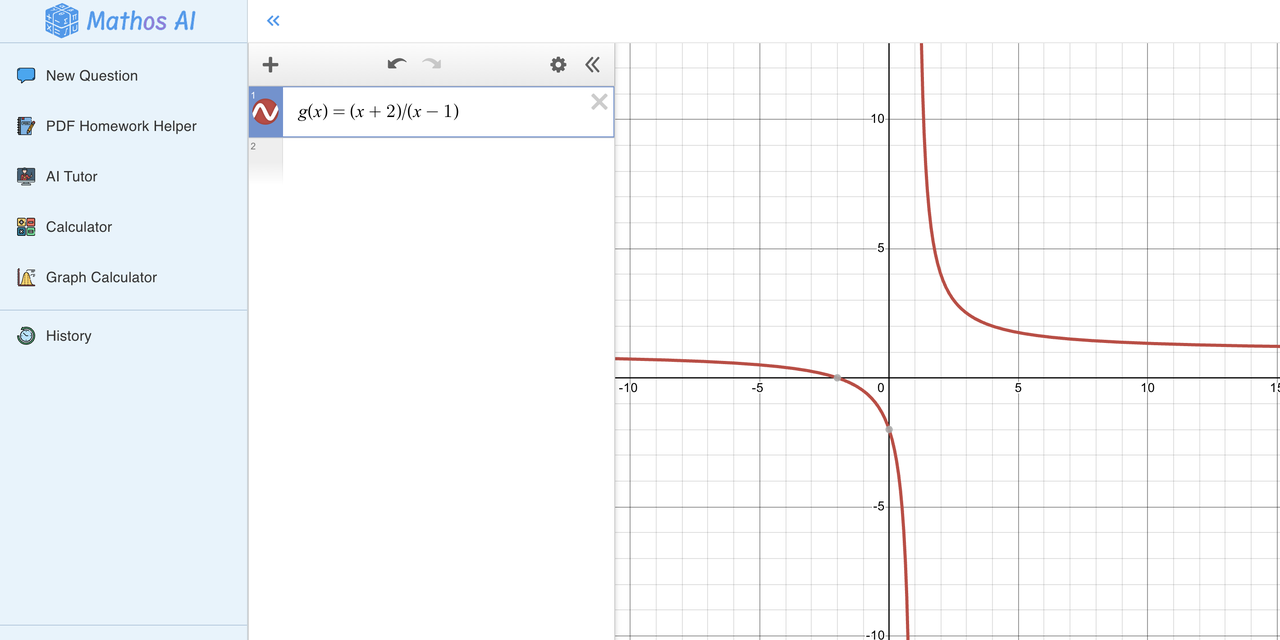
A rational function is a fraction of two polynomials. A good example is: g(x) = (x + 2) / (x - 1)
This rational function is composed of:
- Numerator: x + 2 (a linear polynomial)
- Denominator: x - 1 (another linear polynomial)
Key points about this rational function:
- Graph shoots up/down near x = 1 (vertical asymptote)
- Graph flattens out towards y = 1 as x gets huge
- No valid y-value when x = 1 (undefined point)
- Exponential and Logarithmic Functions
A key difference between exponential and logarithmic functions is that exponential grows rapidly and accelerates, while logarithmic functions grow slowly and decelerate, essentially being inverse operations of each other.
Here’s a graph that shows examples of exponential and logarithmic functions:
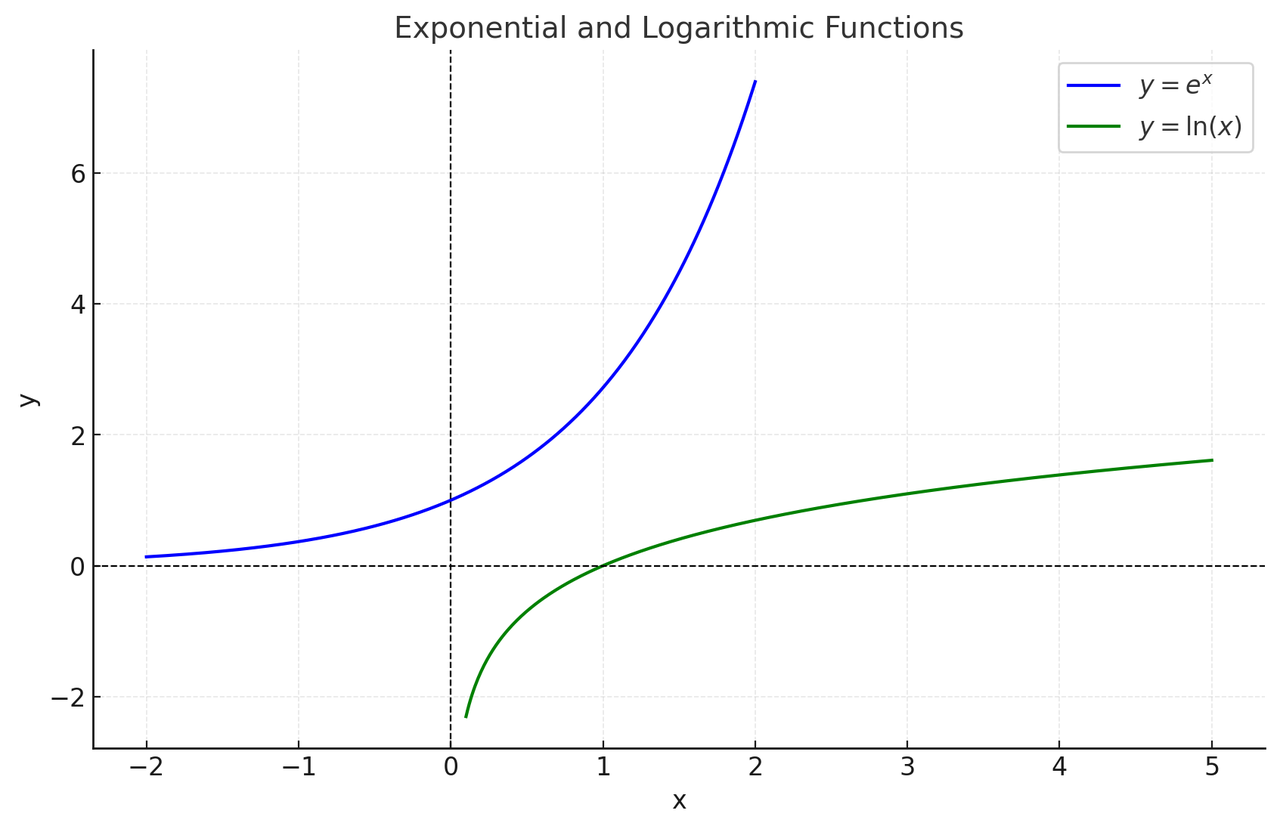
The blue curve shows exponential growth, and the green curve represents the natural logarithm. It grows slowly and is only defined for x>0.
- Trigonometric and Polar Functions
Students will learn how to analyze and solve trigonometric functions and graph polar functions. Trigonometric functions such as sine (sin), cosine (cos), and tangent (tan), are used to model periodic phenomena, which are repeating patterns or cycles.
Consider the function y = 2sin(x) + 1. This represents a sine wave with the following characteristics:
- Amplitude: 2 (the height of the wave from its centerline)
- Period: 2π (the length of one complete cycle)
- Vertical Shift: +1 (the wave is shifted 1 unit upward)
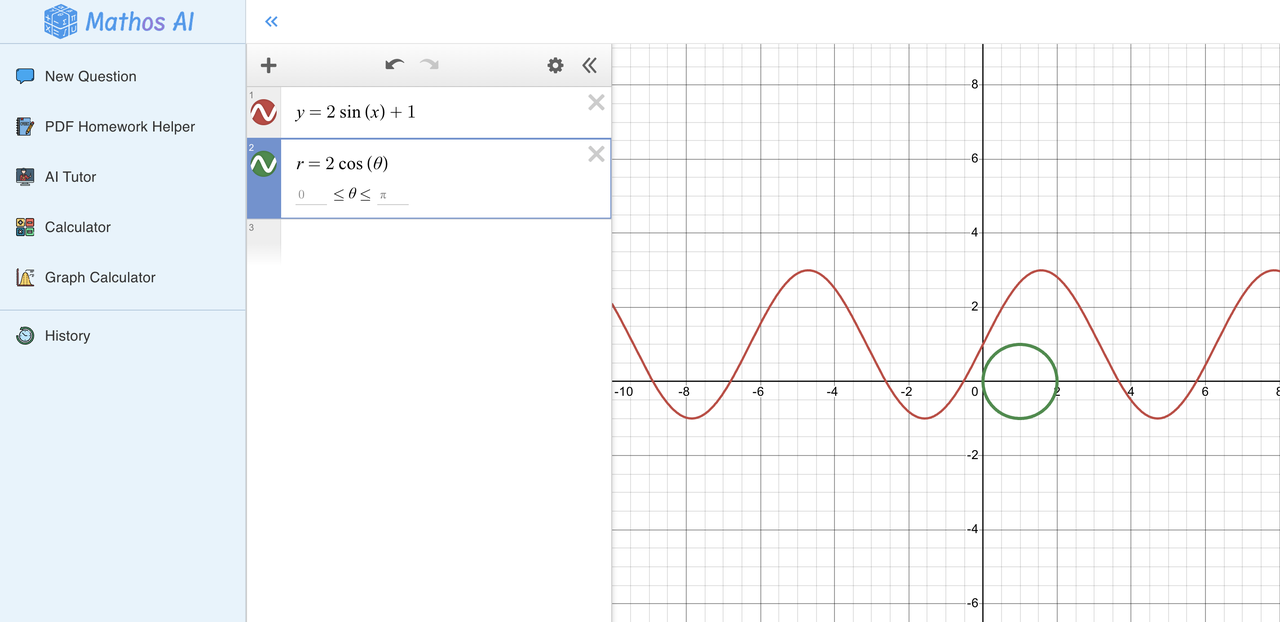
Polar functions offer a different way of representing points and graphs in a plane. Instead of using rectangular (x, y) coordinates, polar coordinates use:
- r: The distance from the origin (the central point)
- θ: The angle from the positive x-axis
For example, the equation r = 2cos(θ) represents a circle with a radius of 1, centered at the point (1, 0) in the polar coordinate system.
- Functions Involving Parameters, Vectors, and Matrices
In AP Precalculus, functions involving Parameters, Vectors, and Matrices help you understand more complex relationships by introducing extra dimensions.
Let's look at an example of a moving boat's position over time.
Parametric Function
Imagine a boat moving across a lake, where its position changes over time:
- Horizontal position: x(t) = 3t
- Vertical position: y(t) = 2t
- Here, t is the time parameter representing the boat's movement
Vector Representation
The boat's velocity vector could be v=⟨3,2⟩, indicating:
- 3 units east per time unit
- 2 units north per time unit
Matrix Transformation
A rotation matrix can change the boat's direction:
By applying this matrix to the boat's initial position, we can rotate its trajectory, demonstrating how matrices can transform geometric paths.
This example shows how parameters track time, vectors represent movement, and matrices enable transformations all working together to describe complex motion.
AP Precalculus Exam
The AP Precalculus exam lasts 3 hours and is divided into two sections (multiple choice and free response). For part of the exam, a calculator is not allowed. Make sure you check out the AP exam calculator policy and the approved graphing calculators before the exam.
40 Multiple Choice Questions | 2 Hours | 62.5% Exam Score
- Part A: 28 questions in 80 minutes (43.75% of your score). No calculator.
- Part B: 12 questions in 40 minutes (18.75% of your score). Graphing calculator required.
4 Free Response Questions | 1 Hour | 37.5% Exam Score
- Part A: 2 questions in 30 minutes (18.75% of your score). Graphing calculator required.
-
Q1: Function Concepts
-
Q2: Modeling a Non-Periodic Context
-
- Part B: 2 questions in 30 minutes (18.75% of your score). No calculator.
-
Q3: Modeling a Periodic Context
-
Q4: Symbolic Manipulations
-
AP Precalculus Exam Questions
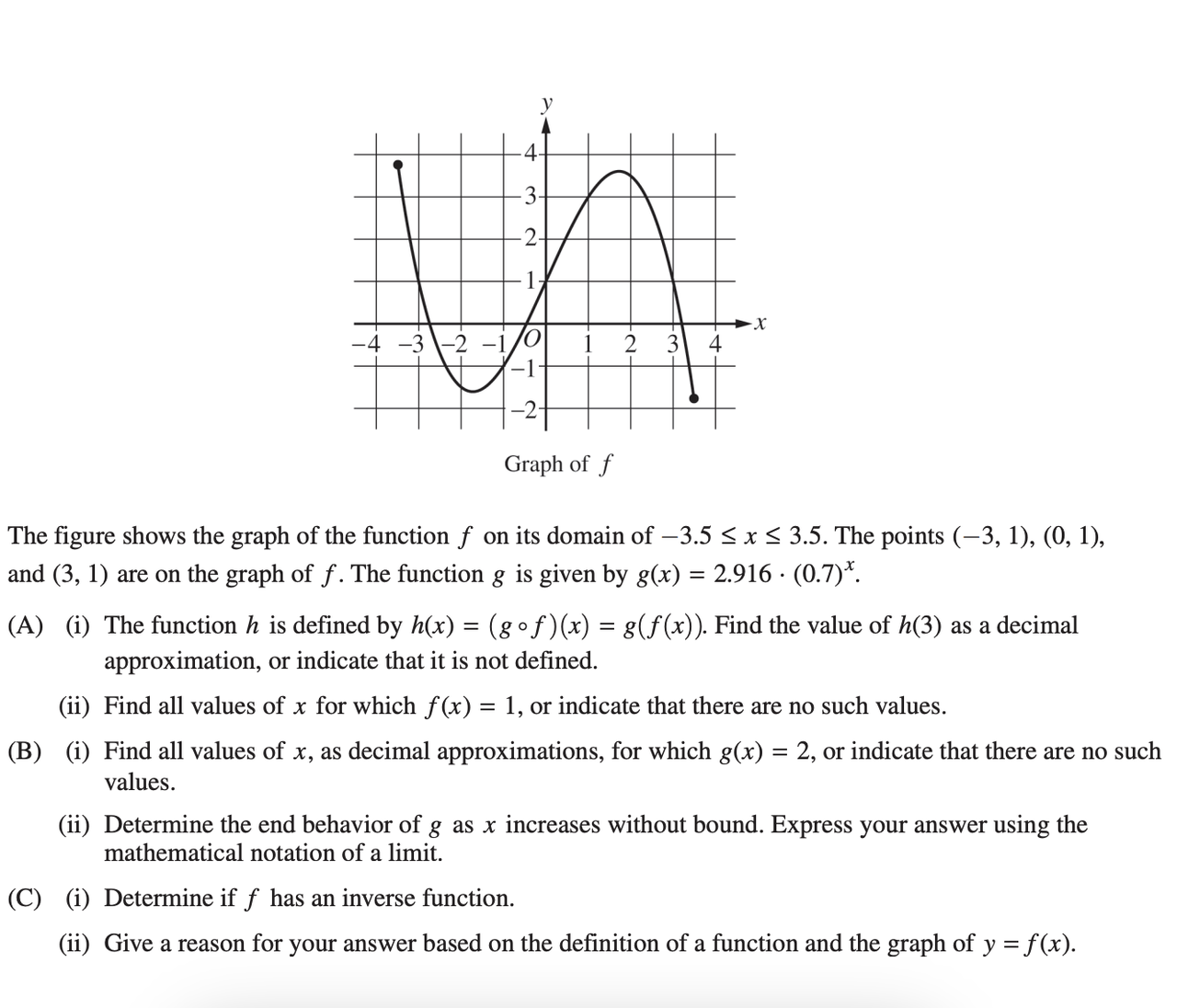
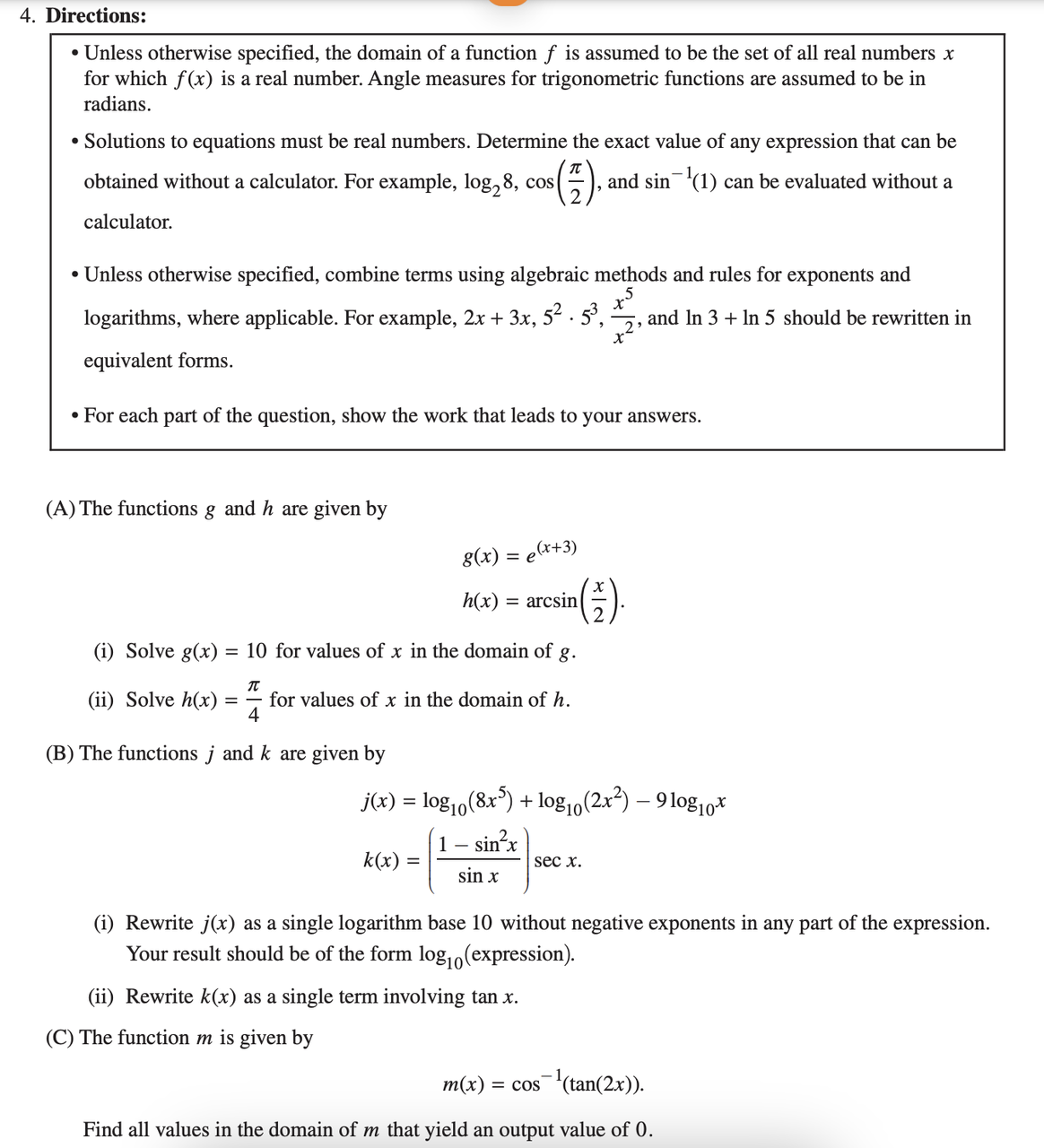
Here are some questions from the past AP Precalculus exams (from the College Board) just to give you an idea of what the exam looks like.
AP Precalculus multiple-choice questions:
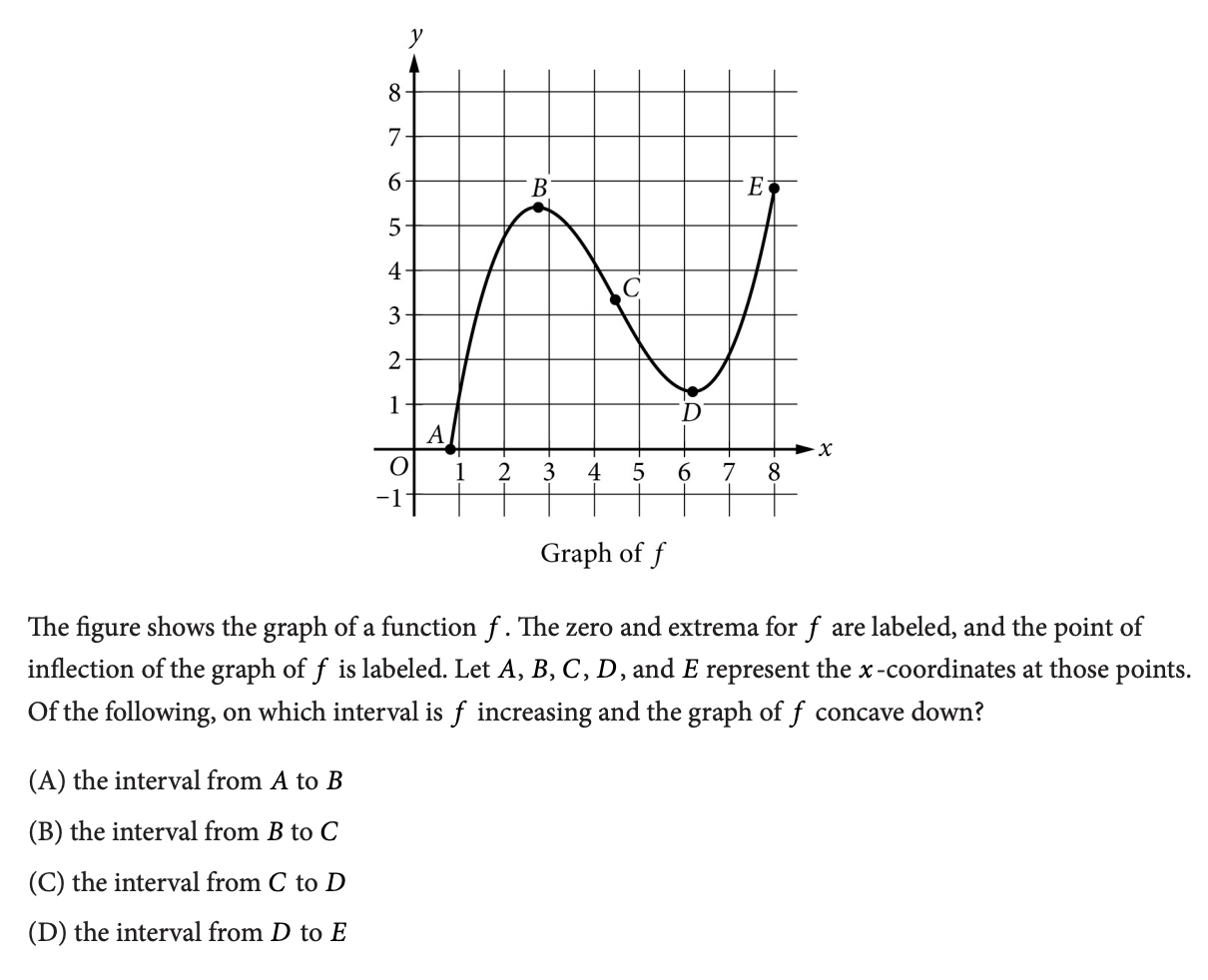
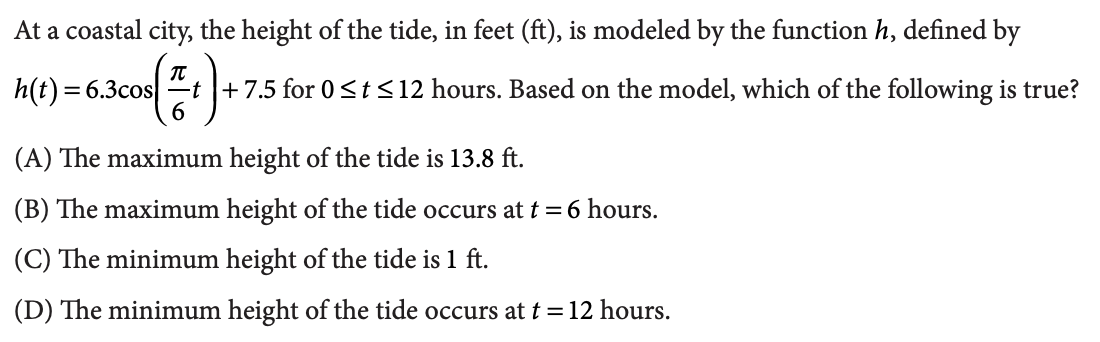
AP Precalculus free response questions:
Tips to Success in AP Precalculus
- Master the core concept of the course
Memorize essential function transformations and key mathematical relationships. It's also important to find your weak spot and spend more time on it. Let's say that you're not perfect at memorizing things, a powerful technique for long-term memory retention is spaced repetition. Review new mathematical information immediately and repeatedly at increasing intervals. The goal is to keep mathematical concepts fresh and readily accessible in your mind.
You can also use AI learning tools to help you with homework and explain the steps to solve math problems. For example, Mathos AI is a great math solver and calculator where you can find an AI tutor, homework helper, and more than 40 calculators for different math problems.
- Practice before the exam
Try to dedicate at least 30 minutes daily to practicing your weakest areas. Solve 5 to 10 problems each day for two weeks before the exam to become familiar with different problem types and improve your overall performance. You can find AP Precalculus practice exams on Albert.io or AP Central.
The week of the exam, try to do a full practice exam. It's a good idea to set a timer to practice as if you are in an actual exam. Remember, 2 hours for multiple choice and 1 hour for free response questions.
- Get proficient with your calculator
Your graphing calculator is a powerful tool, but it's not a magic solution. Practice using your calculator for graphing, solving equations, and performing complex calculations. Remember to store interim values in your calculator for multi-step problems to maintain accuracy in your final answers.
Also, practice switching between calculator and no-calculator modes so that you know exactly when and how to use the calculator effectively.
- Answer exam questions effectively
Always answer the questions you're confident with first, then go back to the challenging ones. Plan your time wisely. Try not to spend more than 2 minutes on each multiple-choice question, and aim for about 15 minutes for each free-response question.
Success in the AP Precalculus Exam comes from consistent effort, strategic studying, and a deep, nuanced understanding of mathematical concepts.
Conclusion
AP Precalculus isn't just about solving equations, it's about developing a sophisticated mathematical mindset and other essential skills like critical thinking, communication, and reasoning. This course is designed to help students prepare for college-level math as it covers topics that are more complex than regular high school math. There are many benefits of taking AP Precalculus. Students who successfully complete the course have the chance to earn college credits or take advanced math classes.
Whether you're aiming for a STEM major or seeking to strengthen your analytical capabilities, this course provides a comprehensive, rigorous mathematical experience that extends far beyond traditional classroom learning.
Embrace the challenge, stay curious, and let AP Precalculus be your gateway to mathematical excellence!
FAQs
What careers can AP Precalculus prepare you for?
AP Precalculus provides a strong foundation for careers in STEM fields like engineering, computer science, physics, and data science.
How does AP Precalculus compare to other advanced math courses in high school?
AP Precalculus acts as a bridge between Algebra II and advanced math courses like Calculus, focusing on a deeper exploration of functions and their properties, while other advanced math courses may specialize in specific areas like statistics or discrete mathematics.
What college math can AP Precalculus replace?
AP Precalculus can replace introductory college math courses like College Algebra or Precalculus, depending on the institution's credit policy. Always check with your college to confirm credit acceptance.
Is AP Precalculus hard?
AP Precalculus can be challenging as it covers advanced math topics like functions, trigonometry, and modeling, but it's manageable with consistent practice. Follow the tips above to excel in the course and exam.
Do you really need pre-calc before calculus?
Precalculus is highly recommended before calculus as it builds a strong foundation in functions, trigonometry, and algebra needed for success in calculus. But it's not a must.